

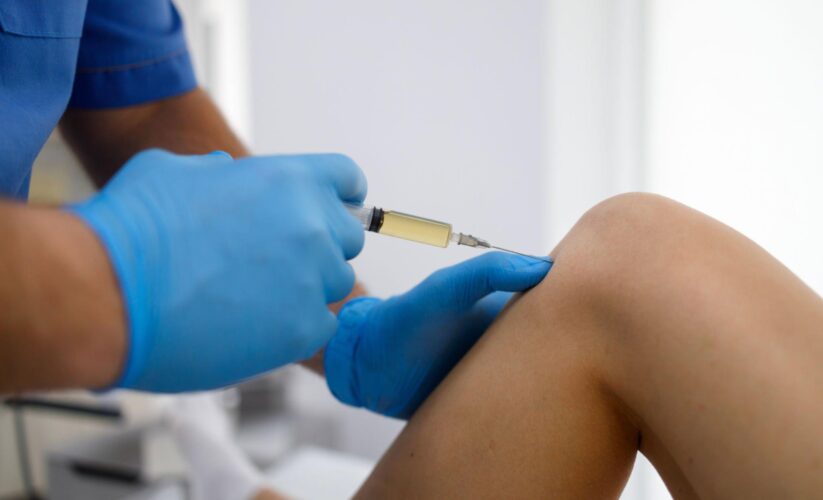
PRP Injection for Knee Pain: Does It Help?
Knee pain has a way of shrinking life. Stairs become a calculation, long walks start to feel optional, and exercise turns into a trade-off between movement today and soreness tomorrow. For many patients, a prp injection for knee pain becomes appealing at exactly this point – when rest, basic pain relief, and standard physical therapy no longer feel like enough, but surgery still seems too aggressive.
PRP, or platelet-rich plasma, is one of the most established biologic treatments in regenerative medicine. It uses a concentrated portion of your own blood, prepared to contain a higher level of platelets and growth factors, then delivered into the knee with the goal of supporting repair, calming inflammation, and improving joint function. It is not a cosmetic trend repackaged for orthopedics. In the right patient, it can be a medically progressive option that sits between conventional symptom management and more invasive intervention.
What is a PRP injection for knee pain?
A PRP injection for knee pain starts with a simple blood draw. That blood is processed so the platelet-rich portion can be separated and concentrated. Platelets are best known for helping blood clot, but they also release signaling proteins and growth factors involved in tissue healing. When placed into an injured or degenerative area, PRP is intended to stimulate a more favorable healing response.
In the knee, this may matter for several reasons. Pain is often not caused by one single issue. Some patients have early or moderate osteoarthritis. Others have chronic tendon irritation around the joint, minor ligament strain, cartilage wear, inflammation in the joint lining, or a combination of these factors. PRP is attractive because it aims to influence the local biological environment rather than simply mute pain for a few hours or days.
That distinction matters. Steroid injections may reduce inflammation quickly, but they do not aim to regenerate tissue. PRP is positioned differently. It is designed to support the body’s own restorative pathways, which is why it often appeals to patients looking for a more natural, longer-horizon approach.
How PRP works inside the knee
The knee is a high-demand joint. It absorbs force with every step, and once irritation becomes chronic, the body may struggle to fully resolve it. PRP introduces a concentrated supply of biologically active factors into that environment. These factors can help regulate inflammation, support cellular signaling, and encourage tissue response in structures that have been slow to recover on their own.
That does not mean PRP rebuilds a severely damaged knee or reverses advanced arthritis overnight. The reality is more nuanced. Response depends on what is driving the pain, how advanced the degeneration is, the patient’s age and activity level, and whether the treatment is part of a broader plan that includes movement correction, rehabilitation, and load management.
This is where medically supervised regenerative care becomes valuable. The injection itself is only one part of the strategy. Proper assessment, imaging when appropriate, and a personalized plan help determine whether PRP is likely to offer meaningful improvement or whether a more advanced biologic treatment should be considered.
Who may benefit most from PRP injection for knee pain?
PRP tends to make the most sense for patients with mild to moderate knee osteoarthritis, persistent inflammation after overuse or sports activity, chronic tendon-related pain around the knee, or joint discomfort that has not responded well to conservative care. It is often considered by active adults who want to stay mobile, avoid repeated steroid use, and postpone or potentially reduce the need for surgery.
Patients with early degenerative change often have the strongest interest in PRP because this is the stage where supporting the joint environment may be most useful. If cartilage loss is severe and the joint is significantly deformed, the potential benefit may be more limited. That does not automatically rule treatment out, but expectations need to be realistic.
Athletes and fitness-focused adults also frequently explore PRP because they are not simply trying to reduce pain. They want to protect performance, recover with less downtime, and preserve the integrity of the joint over time. In that setting, PRP can be part of a larger regenerative philosophy centered on resilience and tissue support rather than short-term suppression.
What results can you realistically expect?
The most honest answer is that it depends. Some patients notice a gradual reduction in pain and stiffness over several weeks, followed by better tolerance for walking, training, stairs, or standing. Others experience modest change rather than dramatic relief. PRP is not usually judged by what happens in the first 48 hours. It is judged by the trajectory that follows.
Many clinicians look for improvements in pain levels, swelling, range of motion, and function over one to three months. In some cases, a series of injections is recommended rather than a single treatment, particularly when symptoms have been present for a long time or joint degeneration is more established.
The key is that PRP is generally a gradual treatment. It works with biology, and biology is slower than anesthesia. Patients seeking instant numbness or immediate return to impact sport may be disappointed. Patients seeking a more natural healing response often find that timeline easier to accept.
PRP vs steroid injections and other options
This is where the conversation becomes practical. Steroid injections can be useful when a patient needs quick anti-inflammatory relief, especially during an acute flare. But repeated steroids may not be ideal for long-term tissue health, and the benefits can wear off quickly.
Hyaluronic acid injections are designed more for lubrication and cushioning. Some patients feel better with them, particularly in certain arthritic knees, but results vary. PRP differs because it is biologically active and patient-derived.
Then there are more advanced regenerative pathways, including bone marrow concentrate and stem cell-based approaches. These may be considered in more complex cases, in patients seeking a broader regenerative strategy, or when PRP alone is unlikely to be enough. A premium regenerative clinic may evaluate PRP not as a standalone product, but as one tool within a customized treatment plan.
What the procedure and recovery are like
A PRP treatment is typically done in an outpatient setting. Blood is drawn, processed, and then injected into the knee. Many patients tolerate the procedure well. Some clinicians use image guidance to improve placement accuracy, especially when targeting a specific compartment or structure.
After the injection, it is common to have temporary soreness or a feeling of pressure in the knee. This does not necessarily mean something is wrong. The treatment is meant to stimulate a response, and mild irritation can be part of that early phase. Patients are often advised to modify activity briefly, then return to a guided progression rather than jumping straight back into full training.
Recovery works best when the injection is respected. The goal is not just to receive treatment, but to give the joint an environment where healing signals can translate into functional improvement.
Risks, limitations, and smart expectations
Because PRP uses your own blood, it is generally considered low risk when performed in an appropriate medical setting. Still, low risk is not the same as no risk. Any injection can carry a small chance of infection, bleeding, bruising, or post-procedure pain. Technique, sterility, and patient selection matter.
There is another limitation that patients should understand clearly: PRP is not magic. It does not guarantee cartilage regrowth, and it does not eliminate the biomechanical realities of a damaged joint. If excess body weight, poor movement patterns, muscle weakness, or severe structural disease are major drivers of pain, those issues still need to be addressed.
This is exactly why serious regenerative medicine should never rely on oversimplified promises. The best outcomes tend to come from the right treatment matched to the right patient at the right stage.
When to consider a regenerative evaluation
If knee pain has become persistent, if imaging shows early wear or inflammation, or if you are trying to stay active without cycling through temporary fixes, it may be time to look beyond conventional injections alone. PRP is often a strong first-line biologic option because it is minimally invasive, patient-derived, and compatible with the body’s own repair mechanisms.
For some patients, that may be enough. For others, PRP is the beginning of a more comprehensive path that could include advanced biologic therapies, rehabilitation planning, and a broader strategy for joint preservation and healthy aging. At CellStemClinic, that broader regenerative view is central to how treatment is approached.
The real value of PRP is not that it promises a miracle. It is that it offers a more intelligent next step for patients who want their knee care to focus on restoration, not just relief – and that shift alone can change the future of how you move.

