

How PRP Supports Tendon Healing and Recovery
A tendon injury can feel deceptively small at first: a painful Achilles when getting out of bed, a persistent tennis elbow when lifting a cup, or shoulder pain that returns every time you reach overhead. Yet tendons heal slowly, and recurring symptoms can limit sport, work, sleep, and confidence in movement. Understanding how PRP supports tendon healing can help patients consider whether this biologic treatment may have a place within a broader, physician-led recovery plan.
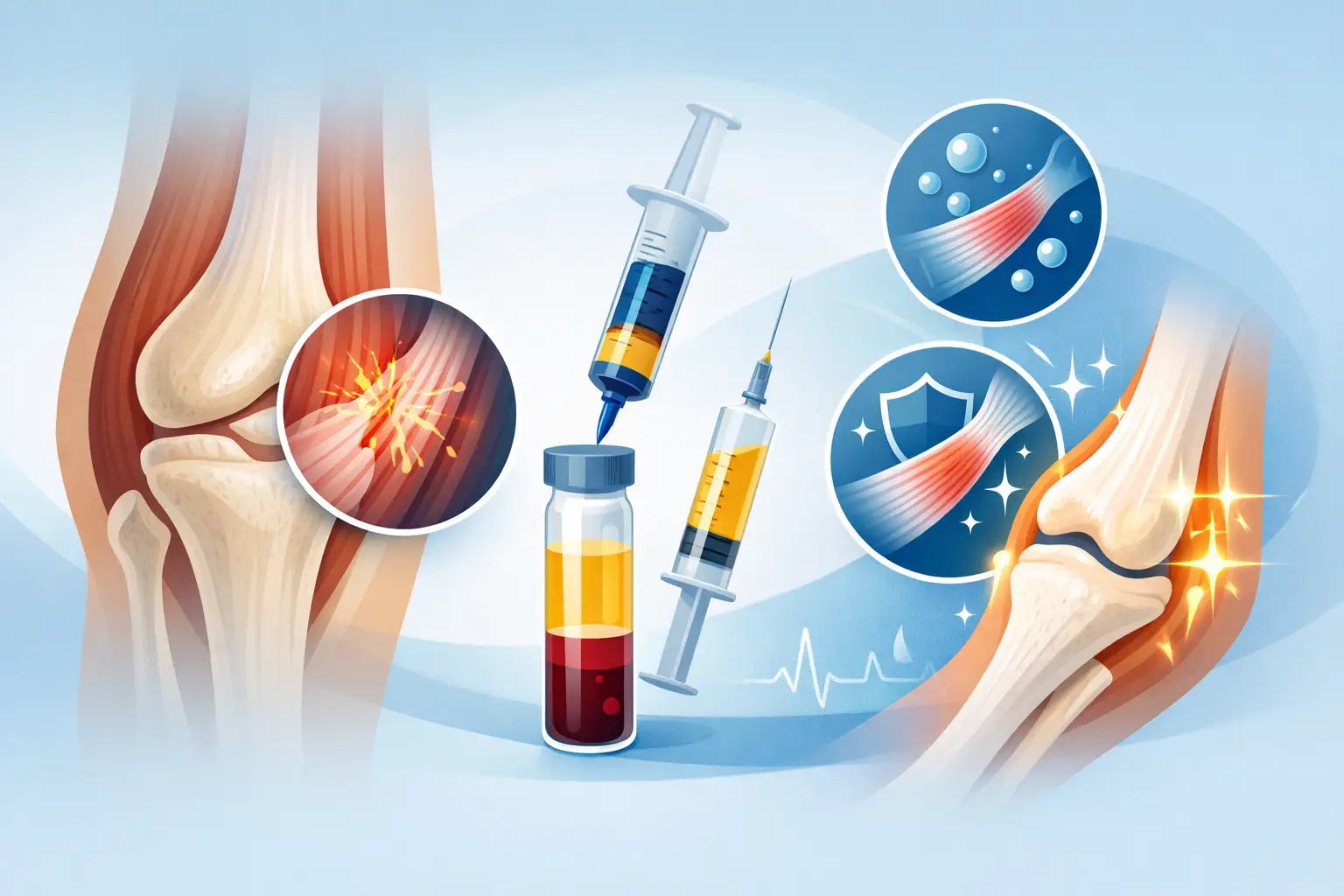
Platelet-rich plasma, commonly known as PRP, uses concentrated platelets from a patient’s own blood. These platelets contain signaling proteins involved in the body’s normal repair response. When PRP is placed precisely in or around an injured tendon, the goal is not simply to mask pain. It is to support the local healing environment while rehabilitation progressively restores strength and load tolerance.
Why Tendon Injuries Often Take So Long to Improve
Tendons connect muscle to bone. They transfer force during every step, lift, throw, jump, and push. Unlike muscle, many tendons have a relatively limited blood supply, particularly in areas prone to overuse and degeneration. That can make their recovery slower and more complex.
Tendon pain is not always a straightforward tear that heals with rest. In many adults, it reflects tendinopathy: a gradual decline in tendon structure and capacity caused by repetitive loading, aging-related changes, previous injury, biomechanics, or a rapid increase in activity. The tendon may become thickened, disorganized, and painful under load. Rest can settle symptoms temporarily, but it does not always rebuild the tendon’s ability to manage the demands that caused pain in the first place.
This is why a modern approach to tendon care typically combines a careful diagnosis, load modification, targeted physical therapy, and, in selected cases, regenerative adjuncts such as PRP. The right plan depends on the tendon involved, the duration of symptoms, imaging findings, training demands, and overall health.
How PRP Supports Tendon Healing at a Cellular Level
PRP is prepared by drawing a small sample of blood and processing it to concentrate platelets in plasma. Depending on the preparation method, the final product may also contain varying amounts of white blood cells and other blood components. The clinician then uses imaging guidance, often ultrasound, to place the PRP at the intended treatment area with greater precision.
Platelets are best known for their role in clotting, but they also release biologically active growth factors and signaling molecules when activated. In tendon care, these signals may help coordinate elements of the repair process. They can influence the behavior of tendon cells, encourage collagen production, and support the formation of new microvascular networks involved in healing.
Healthy tendon tissue relies heavily on well-organized type I collagen, which provides tensile strength. In chronic tendinopathy, collagen structure may become less orderly. PRP is intended to provide a concentrated local biologic stimulus that may support remodeling when paired with the mechanical stimulus of structured rehabilitation.
That distinction matters. PRP does not replace a damaged tendon or make tissue instantly stronger. It may create more favorable conditions for repair, but tendons still need time and gradually progressed loading to remodel. A patient who feels better quickly but returns to high-impact activity too soon may still overload the tendon.
Which Tendon Conditions May Be Considered for PRP?
PRP is frequently discussed for persistent tendinopathies that have not improved sufficiently with appropriate conservative care. Common areas include the Achilles tendon, patellar tendon below the kneecap, lateral elbow tendon in tennis elbow, plantar fascia, and certain shoulder or hip tendon conditions.
The strongest clinical fit is often a chronic, localized tendon problem with a clear diagnosis and a realistic rehabilitation pathway. For example, a recreational runner with longstanding Achilles pain, confirmed degenerative changes on ultrasound, and limited progress after a well-designed strengthening program may be a different candidate from a person with sudden severe pain and a suspected complete rupture.
A full tendon rupture, significant weakness, loss of function, infection, inflammatory disease flare, or pain referred from the spine requires a different assessment. PRP should never delay urgent orthopedic evaluation where surgery or other treatment is needed.
Evidence for PRP varies by condition and by the PRP formulation used. Some studies show meaningful improvement for selected chronic tendon problems, while others show mixed or limited benefit. This variation does not mean PRP has no role. It means treatment should be individualized rather than presented as a universal answer for every tendon injury.
The PRP Procedure and What Recovery May Feel Like
A PRP appointment begins with a medical review to confirm the diagnosis, discuss medications, assess relevant health history, and establish whether PRP is appropriate. Anti-inflammatory medications may need to be avoided around the procedure if medically safe to do so, because the early inflammatory response is part of how PRP is intended to work. Patients should only make medication changes under guidance from their treating clinician.
After the blood draw and processing, the treatment area is prepared. Ultrasound guidance can be particularly valuable in tendon procedures because it allows the clinician to identify tendon changes and direct the injection accurately. Local anesthetic practices vary, as some clinicians prefer to limit anesthetic exposure at the treatment site.
Soreness after PRP is common. Some patients experience a temporary increase in discomfort for several days as the area responds to treatment. This is usually managed with activity modification, appropriate pain relief advised by the clinician, and a clear plan for returning to movement.
The recovery timeline is measured in weeks and months, not days. Light activity may resume relatively soon depending on the tendon and procedure, while strengthening progresses in stages. Running, jumping, heavy lifting, or sport-specific activity is generally reintroduced only when pain, strength, and function indicate that the tendon is ready.
Why Rehabilitation Remains Essential After PRP
PRP works best when it is treated as one component of a coordinated recovery strategy, not a stand-alone shortcut. The tendon must regain its capacity to accept force. Physical therapy provides the progressive loading that tells healing tissue how to organize and strengthen.
Early rehabilitation may focus on maintaining comfortable movement and reducing unnecessary strain. Later stages often include isometric exercises, slow resistance work, eccentric or heavy-slow loading, balance training, and a gradual return to sport-specific demands. The exact sequence differs between an Achilles tendon, elbow tendon, rotator cuff tendon, and patellar tendon.
Nutrition, sleep, metabolic health, and smoking status also influence recovery. A patient may receive an advanced biologic procedure, but poor recovery habits and repeated overloading can still undermine progress. Regenerative care is most powerful when it is supported by the conditions the body needs to repair.
Is PRP Right for You?
The best candidates are often patients who have a defined tendon diagnosis, persistent symptoms, and a willingness to follow a structured rehabilitation plan. Athletes may pursue PRP to support a thoughtful return to performance, while active adults may seek it to improve mobility and reduce the disruption of chronic pain. The treatment may also appeal to patients who want to explore a biologic option before considering more invasive interventions.
However, candidacy is individual. A specialist should review prior treatments, imaging where appropriate, medication use, medical conditions, activity goals, and expectations. Patients who are pregnant, have certain blood disorders, active infection, uncontrolled systemic illness, or specific medication considerations may need alternative care or additional precautions.
At CellStemClinic, PRP can be considered within a personalized regenerative medicine pathway that looks beyond the injection itself. The aim is to match the biologic treatment, rehabilitation strategy, and follow-up plan to the person behind the injury.
A meaningful tendon recovery is rarely about chasing the fastest possible fix. It is about restoring trust in your body, step by step, with a plan that respects both the biology of healing and the life you want to return to.

