

BMC Versus Surgery: When Each Path May Fit
A painful knee that limits stairs, a shoulder that no longer reaches overhead, or a tendon injury that keeps returning can make the decision feel urgent: BMC versus surgery. Yet these options do not solve the same problem in every patient. The most appropriate path depends on what is structurally damaged, how severe symptoms are, what conservative care has achieved, and what you want your recovery to look like.
Bone marrow concentrate, commonly called BMC, is an autologous biologic treatment made from a patient’s own bone marrow. Surgery is a broad category that may range from minimally invasive arthroscopy to tendon repair, ligament reconstruction, fusion, or joint replacement. Comparing them fairly begins with understanding their different roles.
BMC versus surgery: the central difference
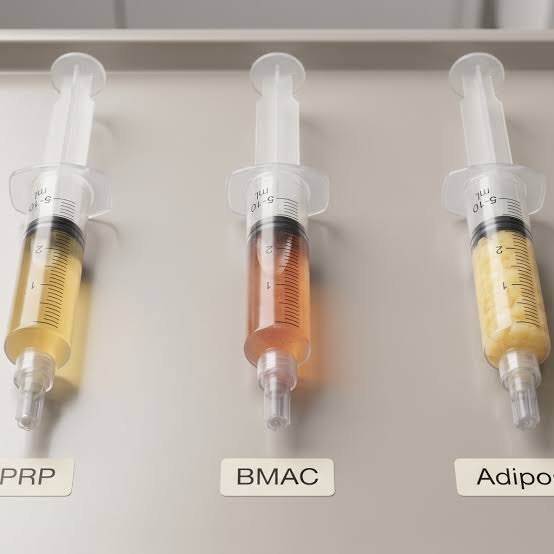
BMC is designed to support the body’s healing environment. During treatment, a clinician collects bone marrow, usually from the pelvic bone, and processes it to concentrate cells and signaling components found naturally in the aspirate. The resulting concentrate may then be placed into or around an area of concern, depending on the condition and treatment plan.
This is not the same as surgically repairing a torn structure, removing a loose body, correcting a major deformity, or replacing a severely worn joint. Those are mechanical problems that may require a mechanical solution. BMC does not reattach a completely ruptured tendon, stabilize an unstable fracture, or reliably reverse end-stage joint destruction.
Surgery, on the other hand, aims to alter anatomy directly. That can be essential when imaging and examination show a condition unlikely to improve without repair or reconstruction. It also brings its own recovery demands, including anesthesia, wound healing, rehabilitation, time away from work or sport, and the potential for complications.
For some people, the real question is not whether biologic therapy is better than surgery. It is whether a regenerative approach is reasonable before surgery, alongside a broader rehabilitation plan, or after surgery when the treating team considers it appropriate.
When BMC may be considered
BMC may be discussed for selected musculoskeletal concerns, particularly when symptoms are persistent but the joint or soft tissue is not structurally beyond preservation. Common conversations include early to moderate osteoarthritis, certain chronic tendon conditions, focal cartilage concerns, and overuse-related pain that has not responded adequately to rest, physical therapy, activity modification, or standard injections.
A patient with knee osteoarthritis, for example, may have pain, stiffness, reduced confidence on stairs, and intermittent swelling while still retaining meaningful joint space and function. If they want to pursue a joint-preservation strategy and understand that improvement is not guaranteed, BMC may be one option to review with a qualified clinician.
The appeal is understandable. The procedure is typically performed on an outpatient basis using the patient’s own tissue, without the extended recovery associated with major surgery. Many patients are motivated by the prospect of supporting recovery while preserving their native anatomy for as long as possible.
That said, “minimally invasive” does not mean risk-free or appropriate for everyone. Bone marrow aspiration and injection can cause temporary soreness, bruising, bleeding, infection, or a pain flare. Outcomes vary with the diagnosis, severity of disease, injection technique, rehabilitation, age, overall health, and expectations.
The evidence deserves an honest conversation
Research into orthobiologics is evolving, and BMC studies are not all alike. They differ in cell preparation, treatment site, imaging criteria, follow-up length, comparison treatments, and patient selection. Some studies report improvements in pain and function for certain joint and tendon conditions, but evidence is still developing and does not establish BMC as a universal substitute for orthopedic surgery.
A medically responsible program should not promise cartilage regrowth, a permanent cure, or a guaranteed avoidance of surgery. Instead, it should explain the rationale, the limitations of current evidence, realistic recovery milestones, and the alternatives available to you. At CellStemClinic, this type of decision should begin with a personalized medical assessment rather than a one-size-fits-all protocol.
When surgery is usually the stronger option
There are circumstances in which delaying surgery can prolong disability or make later treatment more difficult. A complete tendon rupture with loss of function, a displaced fracture, recurrent joint instability, a locked joint caused by a mechanical obstruction, severe nerve compression, infection, or rapidly progressive neurologic symptoms require timely specialist evaluation. These are not situations for self-directed biologic treatment decisions.
Surgery may also be the more predictable option when pain is driven by advanced structural disease. In severe hip or knee osteoarthritis, for instance, the joint may have substantial bone-on-bone change, deformity, marked loss of motion, and daily pain despite comprehensive nonsurgical care. A joint replacement can offer a well-established path to pain relief and function for appropriately selected patients.
The same principle applies to injuries with a clear repair target. A fully torn rotator cuff, unstable ACL injury in an athlete, or significant meniscal tear causing true mechanical locking may call for surgical expertise. BMC may be considered in some postoperative or adjunctive settings, but it should not be presented as a replacement for a repair that is medically indicated.
Recovery is more than downtime
Patients often compare BMC and surgery by asking which has the shorter recovery. That matters, but it is only one part of the equation. Recovery after BMC generally involves a shorter procedural recovery, followed by a structured period of protected activity and progressive rehabilitation. The precise timeline varies by body area and diagnosis.
Surgical recovery can be longer and more intensive, especially after reconstruction or replacement. However, a longer rehabilitation period may be worthwhile if surgery addresses the underlying structural cause of pain or instability more reliably.
In either pathway, rehabilitation remains central. Stronger supporting muscles, improved movement patterns, appropriate loading, sleep, nutrition, body-weight management where relevant, and gradual return to activity influence outcomes. Neither an injection nor an operation removes the need for active participation in recovery.
Questions that lead to a better decision
Before choosing between BMC and surgery, ask what your imaging actually shows and whether it matches your symptoms. Clarify whether the condition is inflammatory, degenerative, mechanical, or a combination. Ask what would happen if you waited, what result is realistically expected from each option, and how success will be measured.
It is also reasonable to ask who performs the procedure, how the BMC is prepared, whether image guidance is used, what rehabilitation is recommended, and what the total cost includes. For surgery, discuss the expected benefit, complication profile, implant or repair considerations when relevant, and the consequences of postponing treatment.
A high-quality second opinion can be especially valuable when you have been told that surgery is inevitable but remain uncertain, or when you have been offered a biologic procedure without a clear diagnosis. The goal is not to choose the least invasive option at all costs. It is to choose the option that fits the biology and mechanics of your condition.
A personalized path forward
BMC can be a compelling part of a regenerative care plan for carefully selected patients who want to explore tissue-preserving options. Surgery remains indispensable when anatomy must be repaired, stabilized, decompressed, or replaced. In many cases, the best decision is made with both perspectives available: regenerative medicine expertise and orthopedic surgical judgment.
Your next step should be a thorough evaluation that respects both your imaging and your lived experience of pain, function, and goals. The right treatment is not the one with the boldest promise. It is the one that gives your body the most credible opportunity to move, recover, and live well.

