

Autologous Versus Donor Stem Cells: Key Differences
A regenerative treatment plan begins with a decision that is more personal than it may first appear: should the cells come from you, or from a carefully screened donor? When considering autologous versus donor stem cells, the best option is not determined by a single label. It depends on your health history, treatment goals, the condition being addressed, the quality and availability of cells, and the clinical protocol designed around you.
For patients seeking support for mobility, recovery, vitality, age-management, or complex chronic health concerns, understanding this distinction can make a consultation far more productive. Both pathways may have a place in regenerative medicine. They simply offer different practical and biological advantages.
What Are Autologous Stem Cells?
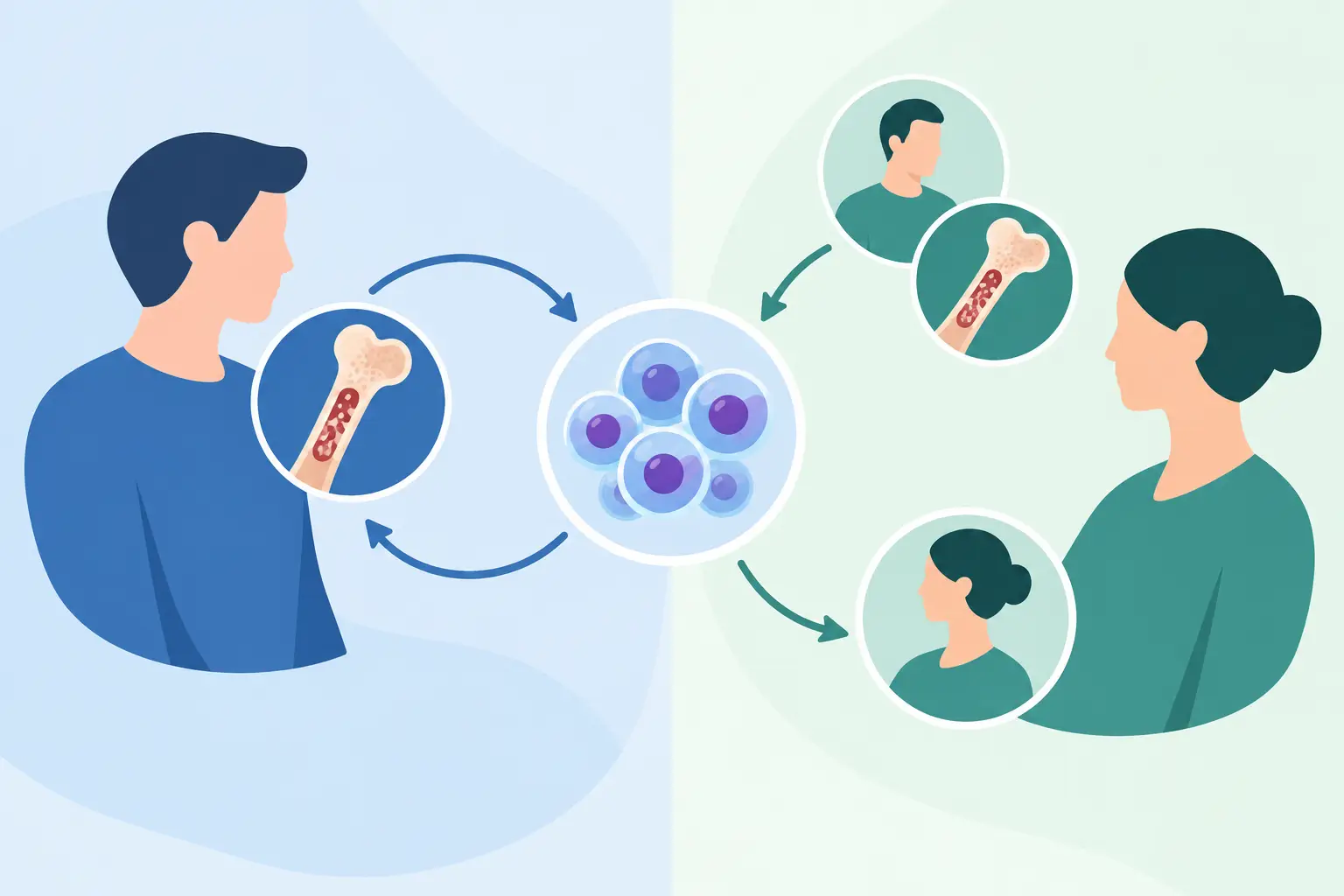
Autologous stem cells are collected from the patient receiving treatment. In regenerative settings, a clinician may obtain cells or cell-rich biologic material from sources such as bone marrow, adipose tissue, or peripheral blood, depending on the medical approach and local regulatory framework.
The central appeal is clear: these are your own cells. Because the material is autologous, there is generally no donor-recipient compatibility question in the same sense as there is with donor-derived cells. This can be reassuring for patients who prefer a treatment approach centered on their own biology and natural regenerative capacity.
Autologous procedures also create a direct connection between collection and treatment. For example, bone marrow concentrate may be prepared from a patient’s own marrow and used as part of a physician-led orthopedic or regenerative protocol. Platelet-rich plasma, while not a stem cell treatment, follows a similar autologous principle: it uses concentrated components from the patient’s own blood.
That said, “your own cells” does not automatically mean “the right cells for every goal.” The number, activity, and regenerative signaling profile of a patient’s cells can vary with age, metabolic health, smoking history, inflammation, medication use, and chronic disease. A sophisticated treatment discussion considers cell quality as well as cell source.
What Are Donor Stem Cells?
Donor stem cells, often called allogeneic cells, are sourced from another individual. In many clinical and research contexts, donor-derived mesenchymal stromal cells are obtained from perinatal tissues, such as umbilical cord tissue, or from adult donor tissues. These products must be handled under appropriate quality, screening, processing, storage, and regulatory standards.
A donor-based approach may be considered when obtaining a sufficient autologous sample is impractical, when a patient wishes to avoid a harvesting procedure, or when the treating clinician believes a donor-derived protocol is better aligned with the intended application. Donor cells can be prepared in advance, which may make treatment scheduling more flexible than approaches requiring same-day collection.
The phrase “donor cells” can raise understandable questions. Responsible care begins with transparency about where biologic material comes from, how donors are screened, how the material is processed, and what evidence supports the proposed use. Patients should expect clear answers, not vague assurances.
Autologous Versus Donor Stem Cells: The Core Differences
The most visible difference is the source of the cells. Autologous cells come from the patient; donor cells come from a screened third party. But the decision reaches further than origin alone.
Autologous treatment usually requires a collection step. Depending on the source, that may involve a blood draw, a bone marrow aspiration, or a small tissue-harvesting procedure. For some patients, this is a worthwhile part of a personalized regenerative strategy. For others, especially those with limited mobility, significant frailty, low cell yield, or a preference for a less invasive pathway, it may be less attractive.
Donor-derived products may avoid the need for harvesting and can offer more consistent manufacturing from batch to batch when produced under rigorous standards. However, the process of screening, laboratory handling, storage, and clinical selection becomes especially important. The credentials of the provider and the traceability of the product should be central to the conversation.
There is also a difference in timing. Autologous treatments can require coordination between collection, preparation, and administration. Donor-derived therapies may be available on a more predictable schedule, subject to the clinic’s protocols and applicable rules. Neither route is universally faster or better. The relevant question is whether the timeline supports your health needs and treatment plan.
Safety, Compatibility, and Medical Oversight
Safety should never be reduced to a slogan. Both autologous and donor-based procedures carry considerations that require medical assessment, sterile technique, appropriate patient selection, and follow-up.
With autologous material, use of the patient’s own cells may reduce certain compatibility concerns. Yet collection procedures still have potential risks, including discomfort, bruising, bleeding, infection, or complications related to anesthesia or sedation when used. Patients with particular blood disorders, active infection, uncontrolled medical conditions, or certain medications may need additional evaluation.
With donor-derived material, clinicians must consider donor screening, infectious disease testing, tissue-processing standards, and the potential for immune-related responses. Mesenchymal stromal cell products are often discussed for their immunomodulatory properties, but that does not mean every donor-derived product is interchangeable or appropriate for every patient. Product source, dose, route of administration, handling, and the patient’s medical status all matter.
A credible clinic will also be direct about the current state of evidence. Stem cell and biologic therapies are active areas of research, but not all uses are approved by the U.S. Food and Drug Administration, and effectiveness can vary substantially by condition and protocol. These therapies should not be presented as a replacement for necessary conventional medical care, emergency treatment, or established disease management.
Which Option May Better Suit Your Goals?
For a localized musculoskeletal concern, an autologous strategy using bone marrow concentrate or related biologic procedures may be discussed as part of a broader plan for recovery, mobility, and joint support. The appeal is the use of your own freshly collected biologic material, often paired with rehabilitation, physical therapy, activity modification, or other medical recommendations.
For patients pursuing broader regenerative or wellness-oriented programs, donor-derived cellular approaches may be considered when treatment goals, logistics, and physician assessment favor a prepared product. This may be especially relevant for individuals who are not ideal candidates for harvesting or who are seeking a protocol with less procedural burden.
Age matters, but it is not the whole story. An older patient may still be a suitable candidate for an autologous procedure, while a younger patient may have reasons to consider a donor-based option. Good regenerative medicine does not make that decision based on age alone. It looks at function, laboratory findings when appropriate, comorbidities, medications, anatomy, prior procedures, and the specific outcome the patient hopes to improve.
Questions Worth Asking During Your Consultation
Before committing to either pathway, ask your clinician what source of cells or biologic material is proposed and why it fits your case. You should also understand whether collection is required, what the procedure involves, what alternatives exist, and what recovery or follow-up will be expected.
For donor-derived therapies, ask about donor eligibility standards, product testing, processing methods, storage, traceability, and the clinic’s adverse-event procedures. For autologous care, ask how your sample will be collected and prepared, whether your medical profile could affect the expected cell yield, and whether a less invasive alternative is available.
It is equally useful to ask what the treatment is designed to support – symptom relief, function, rehabilitation, tissue recovery, or quality of life – and how success will be measured. A responsible clinician will avoid guaranteeing a cure. Instead, they should explain realistic goals, uncertainties, potential risks, and the role of complementary care.
A Personalized Choice, Not a Competition
Autologous and donor stem cell approaches are often framed as competitors. In practice, they are tools with different indications, limitations, and practical demands. One patient may value an approach built around their own harvested cells. Another may be better served by a carefully selected donor-derived protocol, or by a non-cellular biologic treatment such as PRP.
The most valuable next step is a detailed medical consultation that puts your diagnosis, daily function, history, and goals at the center of the decision. When a treatment recommendation is specific, transparent, and medically supervised, you can move forward with clearer expectations and a plan that respects both innovation and your individual biology.

