

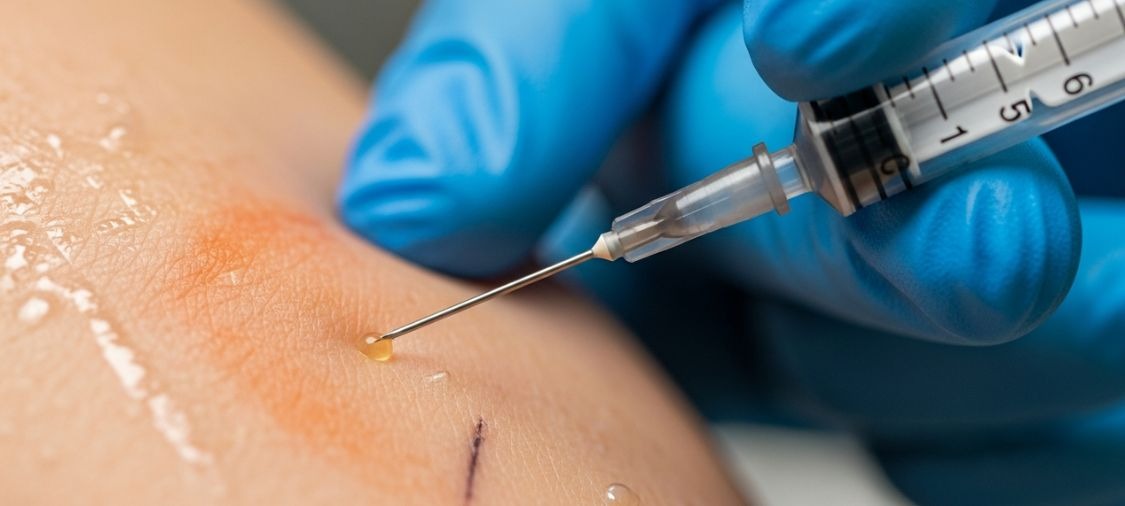
BMC vs PRP Injections: Which Is Better?
A sore knee that no longer trusts stairs, a shoulder that catches every time you reach overhead, a back that flares despite rest – this is usually when the question of BMC vs PRP injections becomes real. Patients are not comparing abstract treatment names. They are trying to decide which regenerative option may give them the best chance of meaningful recovery, better function, and a longer-lasting result.
Both therapies use material from your own body. That matters to many patients who want a more natural, medically progressive path than repeated pain medication or a cycle of temporary symptom management. But BMC and PRP are not interchangeable. They differ in how they are prepared, what they contain, how strongly they may stimulate repair, and which clinical situations tend to justify one over the other.
BMC vs PRP injections: the core difference
PRP stands for platelet-rich plasma. It is created by drawing a sample of blood and concentrating the platelets, which are rich in growth factors and signaling proteins. When injected into an injured or degenerative area, PRP is designed to support healing by influencing inflammation, tissue signaling, and repair activity.
BMC stands for bone marrow concentrate. It is produced by collecting bone marrow, usually from the pelvic bone, and processing it to concentrate a broader mix of biologically active components. Depending on the preparation, BMC may contain progenitor cells, mesenchymal stem cell-related populations, growth factors, platelets, and other regenerative cells that are not present in standard PRP in the same way.
That is why the comparison is not just platelet therapy versus a stronger platelet therapy. BMC is a more complex cellular product. PRP is typically simpler, faster, and less invasive. BMC is more advanced, often more comprehensive, and may be preferred when the treatment goal is a deeper regenerative response.
How PRP works in the body
PRP is often chosen because it is straightforward and well tolerated. After blood is drawn, it is spun in a centrifuge to isolate the platelet-rich portion. That concentrated plasma is then injected into the target area, often under imaging guidance.
Platelets release growth factors that help coordinate tissue repair. In tendons, ligaments, joints, and soft tissue injuries, this can create a more favorable healing environment. The aim is not to numb pain on contact. It is to stimulate a biological response over time.
For many patients, PRP makes sense when symptoms are present but structural damage is relatively moderate. Early osteoarthritis, tendon irritation, mild ligament injury, and sports-related overuse problems are common examples. It can also be attractive for patients who want minimal downtime and a less invasive first step in regenerative care.
How BMC works in the body
BMC begins with bone marrow aspiration, usually from the posterior iliac crest. The marrow is then processed to concentrate valuable regenerative components before injection into the treatment site. Compared with PRP, this approach is more procedure-based and typically more specialized.
What makes BMC compelling is the biological depth of the concentrate. Rather than relying mainly on platelet signaling, BMC delivers a broader regenerative environment that may support tissue modulation, repair signaling, and restoration in a more substantial way. For joints with more advanced degeneration, complex orthopedic injuries, or cases where prior conservative care has failed, that difference can matter.
In premium regenerative medicine settings, BMC is often considered when the objective is not simply calming irritation, but pursuing a more advanced intervention aimed at long-term functional improvement. That does not mean it is always the right choice. It means the clinical threshold for using it is usually higher.
When PRP may be the better choice
PRP is often the better fit when the condition is earlier-stage, localized, and still biologically responsive. A patient with mild knee osteoarthritis, tennis elbow, plantar fasciitis, or a partial tendon issue may not need the complexity of BMC. In these cases, PRP can offer a practical regenerative boost without the added step of marrow harvesting.
PRP also appeals to patients who prefer a lower-cost entry point into biologic treatment. Because the process is simpler, it is generally easier to schedule, easier to repeat, and more approachable for patients who want to start conservatively. If symptoms improve significantly with PRP, a more advanced procedure may not be necessary.
There is also a strategic reason to choose PRP. In some treatment plans, it functions well as part of staged care. A physician may begin with PRP, assess tissue response, and reserve BMC for cases that prove more resistant or more severe.
When BMC may be the stronger option
BMC may be the stronger option when tissue quality is poorer, degeneration is more established, or the clinical goal is more ambitious. This often includes moderate to advanced joint degeneration, difficult tendon injuries, cartilage-related concerns, and cases where previous injections have offered limited benefit.
Patients considering BMC are often looking for more than short-lived relief. They may be trying to postpone surgery, improve mobility after years of decline, or support recovery in a joint or tissue that has not responded well to standard approaches. Because BMC is richer in regenerative cellular elements, it is commonly viewed as the more advanced biologic option.
This is particularly relevant for patients who are investing in personalized regenerative programs rather than one-off symptom treatment. At that level, the question is not just what is easier. It is what gives the tissue the strongest biologic opportunity to recover.
BMC vs PRP injections for joints, tendons, and sports recovery
For joint pain, the choice often depends on severity. PRP may be appropriate for milder osteoarthritis or inflammation-driven pain, especially when the joint still has decent structural integrity. BMC may be favored when degeneration is more pronounced and the aim is to provide a more concentrated regenerative stimulus.
For tendons and ligaments, PRP is widely used and can perform very well, particularly in chronic overuse injuries. BMC may be considered in stubborn cases, partial tears, or high-demand patients who need more than a basic healing signal.
Athletes and highly active adults often ask which option is faster. That is not always the right question. PRP may involve less procedural recovery, but the better long-term outcome depends on matching the biologic treatment to the actual tissue problem. A lighter procedure is not necessarily the superior one if the injury is more complex.
What about recovery, discomfort, and safety?
PRP is usually the easier experience. It requires a blood draw and injection, with some localized soreness afterward. Many patients return quickly to light daily activity, although they still need to respect a guided recovery plan.
BMC is more involved because it includes the marrow collection procedure as well as the injection itself. There can be added soreness at the harvest site, and some patients need a bit more downtime in the first few days. Even so, when performed by experienced clinicians in an appropriate medical setting, BMC is generally well tolerated.
Both treatments use autologous material, meaning it comes from your own body. That reduces certain compatibility concerns, but safe treatment still depends on patient selection, sterile technique, imaging precision, and proper medical oversight. Regenerative procedures are only as good as the protocol behind them.
Cost matters – but value matters more
PRP is usually less expensive than BMC. That is one reason it is so commonly discussed. But price alone can be misleading.
If a patient with advanced degeneration chooses PRP mainly because it costs less, the treatment may underdeliver for the problem being treated. On the other hand, choosing BMC for a relatively mild issue may be more intervention than necessary. The better question is not which procedure is cheaper. It is which procedure is most appropriate for the biology of the condition, the goals of the patient, and the quality of the treatment program.
In a doctor-led regenerative setting such as CellStemClinic, this distinction is central. The best plans are tailored, not generic. They consider severity, imaging, symptom history, previous treatment response, age, activity level, and long-term objectives.
So which injection is better?
The honest answer is that neither is universally better. PRP is an excellent option for the right patient, especially when the goal is to stimulate healing in a less invasive and more accessible way. BMC may offer a more advanced regenerative opportunity when the condition is more severe, the tissue environment is more compromised, or the patient wants a higher-level biologic intervention.
That is why a meaningful BMC vs PRP injections decision should never be made from marketing claims alone. It should come from a careful medical evaluation, a clear diagnosis, and an understanding of what each therapy is actually designed to do.
The right regenerative treatment should feel proportionate to the problem – advanced where it needs to be, restrained where it should be, and always centered on restoring movement, comfort, and confidence in your body again.

