

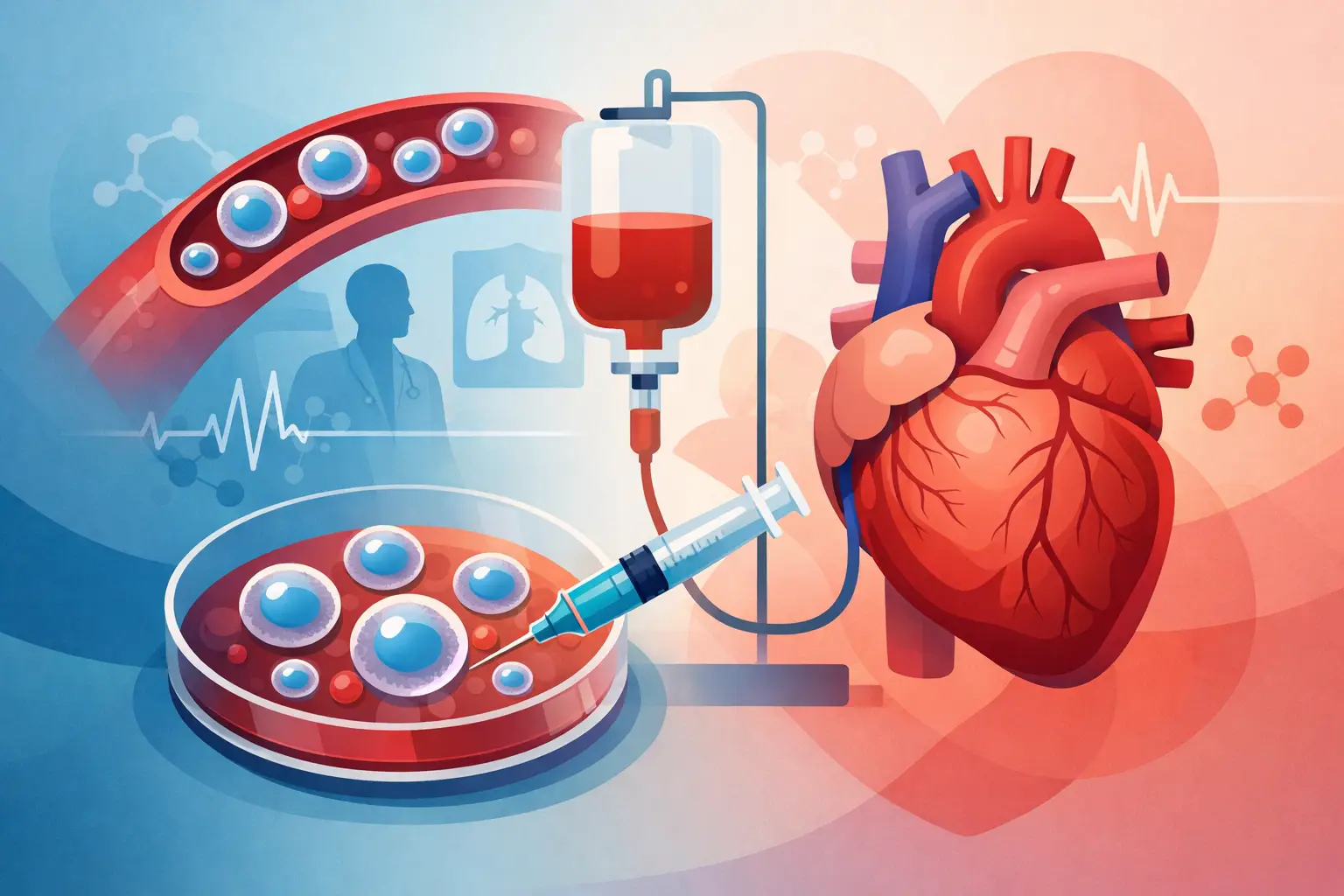
Stem Cell Therapy for Heart Disease: Does It Help?
A heart that has been damaged by a heart attack, weakened by chronic ischemia, or strained by heart failure does not simply return to its prior state once symptoms are controlled. This is why stem cell therapy for heart disease continues to attract serious attention from patients and researchers alike: it is designed around the possibility of supporting the heart’s own repair environment, not merely managing the consequences of injury.
For people who remain limited by fatigue, breathlessness, reduced exercise tolerance, or a diminished quality of life despite conventional care, regenerative medicine may feel like an important next conversation. It should, however, be approached with clear expectations, careful medical screening, and respect for the evolving nature of the science.
Why Heart Disease Creates a Regenerative Challenge
The heart is remarkably durable, but its ability to replace damaged muscle is limited. After a heart attack, part of the heart muscle may be deprived of oxygen long enough to form scar tissue. That scar does not contract as healthy muscle does. Over time, the remaining heart muscle may need to work harder, potentially contributing to remodeling, reduced pumping function, and the symptoms associated with heart failure.
Conventional cardiology remains essential. Medication, lifestyle measures, cardiac rehabilitation, revascularization procedures, implanted devices, and surgery can all protect the heart, reduce risk, and improve survival for the right patient. Regenerative treatment is not a substitute for these standards of care. Instead, it is being investigated as a complementary strategy for selected individuals whose cardiac tissue has been injured or whose function remains impaired.
The central question is not whether cells can magically grow a new heart. It is whether specific cell-based approaches can help create conditions that support tissue repair, healthy blood vessel formation, modulation of inflammation, and improved cardiac function in appropriately selected patients.
How Stem Cell Therapy for Heart Disease May Work
Stem cell-based therapies used in regenerative medicine often focus on mesenchymal stem cells and progenitor cell populations. These cells are valued less for becoming new heart muscle directly and more for the signaling molecules they release. Through what is often described as paracrine activity, they may communicate with surrounding tissues and influence repair processes.
Researchers are studying whether these signals can help reduce harmful inflammation, support microcirculation, encourage new blood vessel development, protect stressed heart cells, and improve the environment around injured tissue. In some clinical research settings, cell therapies have been associated with improvements in measures such as symptoms, exercise capacity, or left ventricular function. Results have varied, which is exactly why individualized assessment and responsible clinical oversight matter.
The source and preparation of cells matter as well. Depending on the treatment protocol and jurisdiction, cells may be obtained from a patient’s own tissue or from carefully screened donor-derived sources. Bone marrow concentrate can contain a mix of cells and biologically active factors, while mesenchymal stem cell preparations are designed to provide a more defined cellular product. These are not interchangeable treatments, and a patient deserves a clear explanation of what is being proposed and why.
Which Heart Conditions Are Being Studied?
Cellular therapies are being researched across several cardiovascular concerns, particularly ischemic heart disease, previous myocardial infarction, chronic heart failure, and certain forms of cardiomyopathy. The evidence is not equally developed for every diagnosis, and the treatment pathway that may be considered for a person with ischemic cardiomyopathy can differ substantially from one considered for inflammatory or nonischemic heart muscle disease.
A previous heart attack is one area of sustained interest because the injury can leave lasting scar tissue and reduced function. In heart failure, the aim is usually not to promise a cure but to explore whether regenerative signaling may support function and quality of life alongside optimized cardiac care. For angina or coronary artery disease, any regenerative approach must be evaluated in the context of the patient’s vascular health, plaque burden, prior stents or bypass surgery, and current risk profile.
Not every patient with cardiovascular disease is a candidate. Active infection, uncontrolled arrhythmias, advanced kidney or liver dysfunction, untreated cancer, unstable symptoms, or inadequate medical optimization may change whether treatment is appropriate or when it should be considered. A credible program begins with these realities rather than bypassing them.
What a Responsible Treatment Pathway Should Include
For a patient considering advanced regenerative care, the consultation is as important as the procedure itself. A physician-led evaluation should review the diagnosis, symptom history, medications, imaging, cardiac testing, previous interventions, and current goals. Echocardiography, cardiac MRI, laboratory work, electrocardiography, and functional testing may be relevant depending on the individual case.
The most useful question is often not, “Can this treatment help?” but “What could it realistically help in my specific situation?” Some patients prioritize reduced fatigue or improved walking tolerance. Others want to preserve independence, support recovery after an ischemic event, or explore additional options when standard measures have plateaued. These goals should be discussed openly and measured wherever possible.
Treatment delivery can also vary. In research and specialist settings, cells may be administered intravenously, through catheter-based approaches, or through more targeted delivery methods. Each route has distinct practical considerations. The choice depends on the cell product, diagnosis, safety profile, clinician experience, and the treatment protocol being followed.
At CellStemClinic, regenerative programs are designed around personalized medical assessment rather than a one-size-fits-all infusion. For cardiovascular concerns, that individualized approach is especially significant because heart disease is rarely one condition in isolation. Blood pressure, metabolic health, inflammation, sleep, weight, mobility, stress, and vascular risk all influence the broader picture.
The Evidence: Encouraging, but Still Evolving
Stem cell research in cardiology has generated meaningful scientific interest, but patients should be wary of claims that overstate certainty. Clinical trials have not produced one universal answer, partly because studies differ in cell type, dose, route of administration, timing after injury, patient selection, and the outcomes measured.
Some studies suggest potential benefits in select populations, while others have shown more modest or inconsistent results. This does not mean the field lacks promise. It means regenerative medicine must be interpreted with the same rigor expected of every other area of cardiovascular care.
In the United States, there is currently no broadly FDA-approved stem cell product specifically approved to treat heart disease. Patients considering treatment internationally should ask direct questions about the regulatory framework, the source and handling of cells, clinical supervision, adverse-event monitoring, and the evidence supporting the proposed protocol. Premium care should mean transparent care.
Balancing Regeneration With Whole-Heart Health
A cellular treatment cannot offset ongoing smoking, uncontrolled diabetes, severe sleep apnea, persistent high blood pressure, or a diet that accelerates vascular disease. The strongest regenerative strategy is one that works alongside a disciplined plan for heart health.
That plan may include medication adherence, cardiology follow-up, nutrition support, supervised movement, weight management, stress reduction, and restorative sleep. These measures are not less advanced because they are familiar. They create the biological conditions in which the cardiovascular system has its best opportunity to stabilize and recover.
For some people, a regenerative program may also include adjunctive approaches intended to support systemic wellness, inflammation management, or recovery. Whether these are appropriate depends on the patient’s diagnosis and medical history. The more complex the cardiac condition, the more important it is that all treating clinicians communicate clearly.
Questions Worth Asking Before You Proceed
Before committing to any stem cell program, ask what type of cells will be used, how they are sourced and processed, and what route of administration is recommended. Ask what outcomes are realistic for your diagnosis, how progress will be tracked, and what side effects or complications may occur. You should also understand the role of your cardiologist before, during, and after treatment.
A trustworthy clinician will not pressure you to stop prescribed medication or delay necessary conventional treatment. They will explain where the evidence is strong, where it remains preliminary, and why your individual profile may or may not fit the proposed approach.
The future of cardiac care may be increasingly regenerative, but the right decision is never driven by hope alone. It is guided by a detailed diagnosis, experienced medical judgment, and a treatment plan that respects both the remarkable potential and the present limits of science.

