

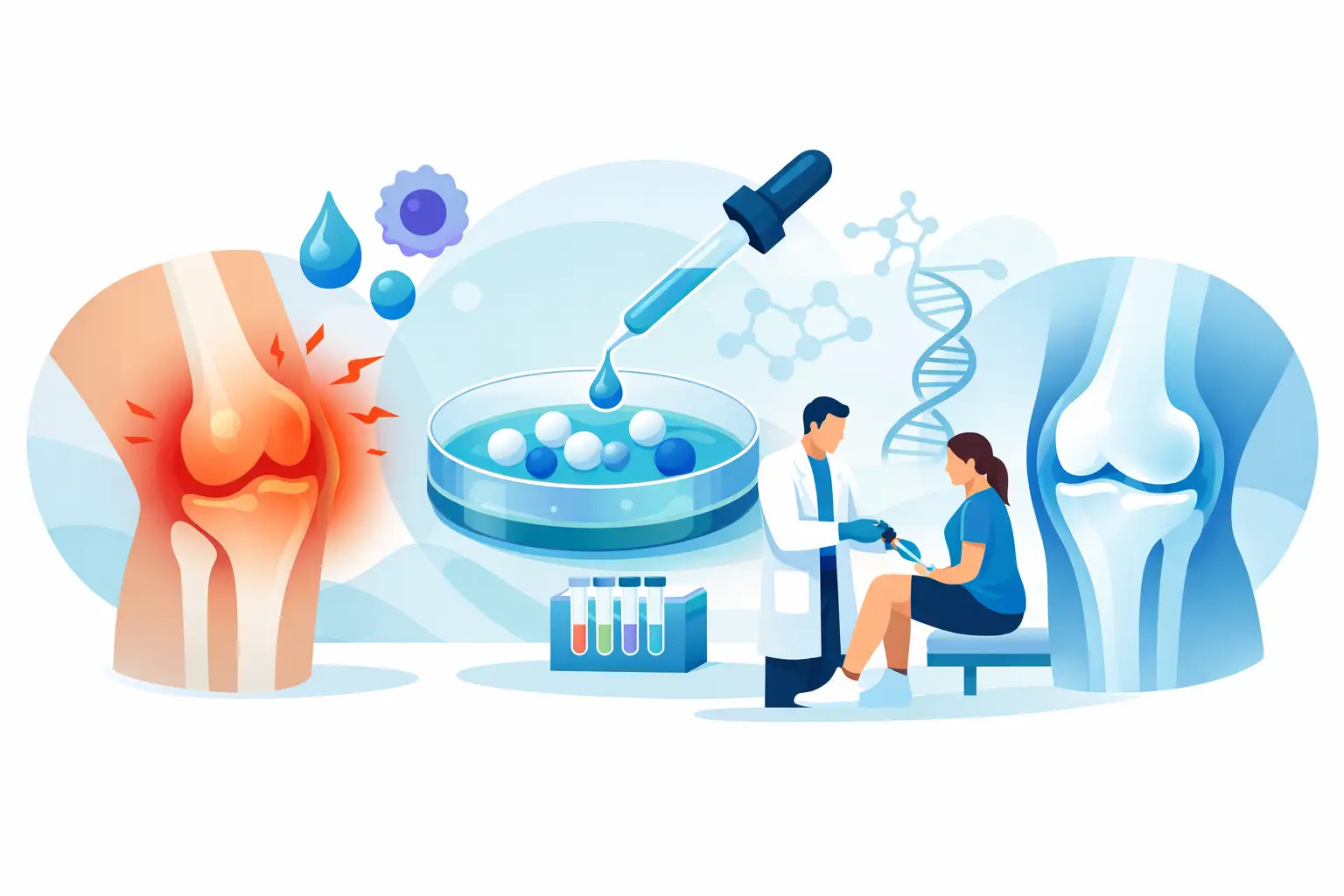
How Biologic Procedures Reduce Joint Inflammation
A knee that swells after a short walk, a shoulder that aches through the night, or hands that feel stiff before the day has begun can make inflammation feel like the real condition, rather than a symptom. Understanding how biologic procedures reduce joint inflammation helps patients look beyond temporary pain relief and toward treatment strategies designed to support the body’s own repair signals.
Biologic procedures are not a substitute for a precise diagnosis. Joint inflammation can arise from osteoarthritis, tendon injury, overuse, autoimmune disease, prior surgery, crystal arthritis, or an active infection. Each calls for a different medical response. For carefully selected patients, however, regenerative options such as platelet-rich plasma (PRP) and bone marrow concentrate (BMC) may become part of a personalized plan to improve comfort, movement, and long-term joint resilience.
Why Joint Inflammation Can Become Persistent
Inflammation is a normal protective response. After tissue is irritated or injured, the body increases blood flow and sends immune cells and chemical messengers to the area. This process can produce warmth, swelling, tenderness, and stiffness. In the short term, it is part of healing.
The problem begins when inflammatory signaling continues after the original trigger has settled, or when a joint is repeatedly exposed to mechanical stress it cannot adequately tolerate. In osteoarthritis, for example, cartilage changes, alterations in the joint lining, muscle weakness, and abnormal loading can all contribute to a cycle of pain and inflammation. In tendons and ligaments, impaired tissue quality may limit the body’s ability to restore healthy movement.
Conventional care can be highly valuable. Physical therapy, activity modification, weight management when appropriate, anti-inflammatory medication, and treatment for an underlying autoimmune condition all have a role. Yet some patients continue to experience limitations despite these measures, or prefer to explore options that aim to influence the local healing environment rather than simply suppress symptoms.
How Biologic Procedures Reduce Joint Inflammation
Biologic procedures use materials derived from the patient’s own body, typically blood or bone marrow, to deliver naturally occurring cells, platelets, proteins, and signaling molecules to a targeted area. The intent is not to force a joint to become new overnight. It is to create a more favorable biological environment for recovery while reducing the signals associated with ongoing irritation.
PRP is prepared from a small blood draw. The sample is processed to concentrate platelets, which contain growth factors and other bioactive proteins. When introduced into an injured or degenerative joint area, PRP may help modulate inflammatory pathways, support communication between cells, and encourage a more organized repair response.
BMC is obtained from bone marrow and processed into a concentrated preparation. It may contain a mixture of progenitor cells, platelets, and signaling factors. These components are being studied for their potential to influence inflammation, support tissue homeostasis, and assist the body’s natural healing processes. The exact cellular composition varies from one individual and preparation method to another.
The anti-inflammatory effect is best understood as modulation, not shutdown. Healthy healing requires some inflammatory activity. The clinical aim is to reduce excessive or persistent inflammatory signaling while supporting the tissue environment needed for function and recovery.
A more balanced joint environment
In practical terms, biologic procedures may influence the messages exchanged by immune cells, cells in the joint lining, cartilage-supporting cells, and surrounding soft tissues. Growth factors and cytokines can affect how these cells behave. Some signals may encourage repair-oriented activity, while others may help quiet pathways linked with persistent pain and swelling.
This matters because a painful joint is rarely only a cartilage problem. The joint lining, synovial fluid, bone beneath the cartilage, tendons, ligaments, and surrounding muscles all contribute to how a person feels and moves. A procedure that supports the broader biological environment may be useful when it is paired with a thoughtful rehabilitation strategy.
Support for recovery without relying solely on medication
Nonsteroidal anti-inflammatory drugs and corticosteroid injections can be appropriate tools, particularly during acute flares. They also have limitations. Frequent medication use may not be suitable for everyone, and repeated steroid injections can be a concern in certain tissues or clinical situations.
Biologic treatment is often considered by patients who want to reduce their reliance on short-term symptom management. That does not mean medication should be stopped without medical guidance, nor does it mean a biologic procedure will work for every diagnosis. It means the treatment conversation can expand to include approaches that seek to support natural repair signaling.
PRP and BMC: Similar Goal, Different Role
PRP and BMC are often discussed together, but they are not interchangeable. PRP is generally less invasive because it is prepared from blood. It may be considered for mild to moderate joint degeneration, tendon disorders, ligament concerns, or localized soft-tissue irritation, depending on the clinical assessment.
BMC involves a bone marrow aspiration and is therefore a more involved procedure. It may be considered when the clinical picture is more complex, when tissue degeneration is more advanced, or when a physician believes a concentrated preparation with a broader range of cellular components is appropriate. The right choice depends on the joint involved, imaging findings, severity of symptoms, prior treatments, health history, and the patient’s goals.
Neither approach should be presented as a guaranteed cure for arthritis or a replacement for joint surgery when surgery is clearly indicated. Results vary. Some patients report improved pain and mobility over time, while others have a more limited response. A responsible recommendation begins with whether the treatment fits the diagnosis, not with a one-size-fits-all package.
Precision Matters as Much as the Biologic Material
A high-quality procedure is more than a prepared injection. The clinician must identify the source of pain accurately. Hip pain can originate from the hip joint, lower back, tendons, or surrounding muscles. Knee discomfort may reflect the joint itself, meniscal injury, instability, or a problem higher or lower in the movement chain.
Image guidance may be used when clinically appropriate to improve placement accuracy. A detailed evaluation should also consider range of motion, gait, strength, activity demands, laboratory findings when relevant, and imaging such as X-ray, ultrasound, or MRI. For patients with inflammatory arthritis or autoimmune disease, coordination with the specialist managing systemic treatment is particularly important.
At CellStemClinic, treatment planning is built around this individualized perspective: identifying the biological and mechanical contributors to symptoms before recommending a regenerative pathway. The goal is to make advanced care feel considered, medically supervised, and aligned with the patient’s larger health priorities.
What Recovery Can Look Like After Treatment
A biologic procedure is usually followed by a period of guided recovery rather than immediate return to full activity. Temporary soreness or swelling can occur after injection or aspiration. This early response does not automatically indicate a problem, but patients should receive clear instructions about expected symptoms and when to contact their clinical team.
Rehabilitation is often where long-term progress is made. The treated area needs an opportunity to settle, followed by progressive movement, strength work, and attention to biomechanics. A patient with knee osteoarthritis may benefit from strengthening the quadriceps and hips, improving ankle mobility, and adjusting high-impact training. Someone with shoulder pain may need to restore shoulder blade control and address posture or workload.
Timelines differ. Some patients notice changes within weeks, while biological remodeling and functional improvement may take months. Lifestyle factors also matter. Sleep, nutrition, metabolic health, smoking status, and the ability to follow a tailored rehabilitation plan can all influence recovery.
Who Should Pause Before Considering Biologics?
A careful screening process protects patients. Active joint infection, unexplained swelling, fever, a suspected fracture, uncontrolled bleeding risk, and certain medical conditions require prompt conventional evaluation or specialist management rather than elective regenerative treatment. Severe structural damage may also require an orthopedic surgical opinion.
Patients should be equally cautious of claims that any injection can regenerate a severely damaged joint, treat every autoimmune condition, or eliminate the need for medical care. Regenerative medicine is advancing quickly, but appropriate patient selection, transparent discussion of evidence, and realistic goals remain essential.
For a person whose joint inflammation has begun to narrow daily life, the most useful next step is a thorough medical consultation that asks both questions: what is driving the inflammation, and what combination of treatment, rehabilitation, and lifestyle support gives the joint its best chance to move more freely again?

