

Orthobiologic Knee Outcomes: What Shapes Results
A knee can look modestly abnormal on imaging yet cause severe daily limitation. It can also show advanced wear while still allowing an active life. That is why orthobiologic knee outcomes cannot be predicted from an MRI alone. The diagnosis, the knee’s mechanical environment, the biologic selected, and the patient’s rehabilitation all influence whether treatment supports meaningful improvement in pain, confidence, and function.
For people who want to remain active without moving immediately toward surgery, orthobiologic care offers a medically progressive way to explore the body’s own repair signaling. It is not a one-size-fits-all replacement for physical therapy, weight management, medication, or orthopedic surgery. In the right setting, however, treatments such as platelet-rich plasma (PRP) and bone marrow concentrate (BMC) may be incorporated into a personalized plan designed to support joint health and mobility.
What Orthobiologic Treatment Is Designed to Do
Orthobiologics are biologically derived substances used to influence the healing environment of an injured or degenerative musculoskeletal structure. In knee care, they are commonly considered for osteoarthritis, cartilage-related symptoms, tendon conditions, ligament injuries, and persistent pain after a prior injury.
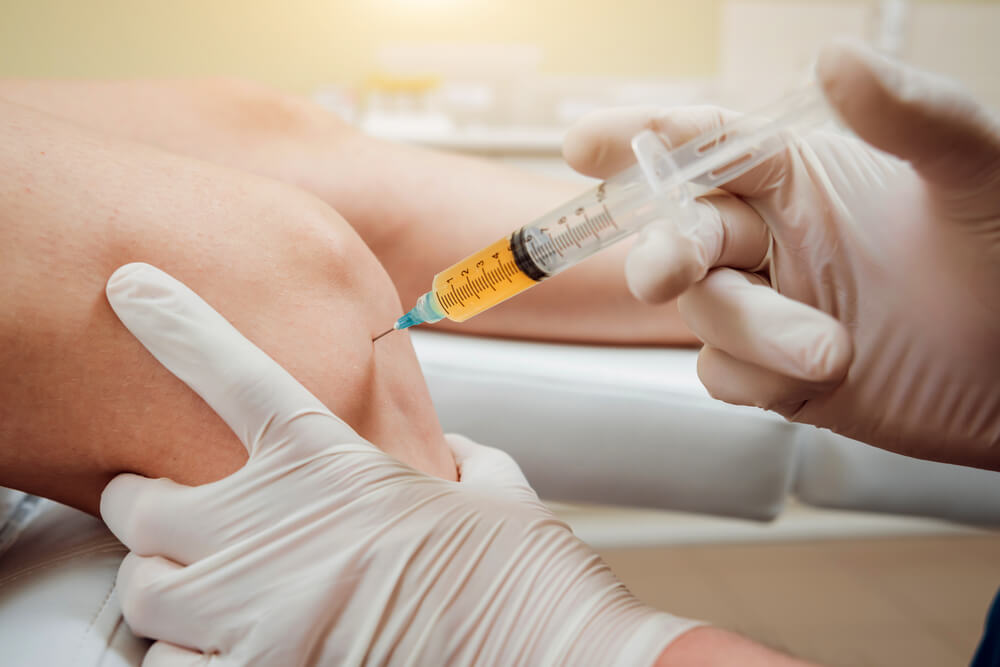
PRP uses a concentrated portion of a patient’s own blood that contains platelets and signaling proteins. When introduced into a targeted area, PRP is intended to support the inflammatory and repair processes involved in tissue recovery. BMC is obtained from bone marrow and contains a mixture of cells, platelets, growth factors, and other biologically active components. It is often considered when a clinician believes a more comprehensive autologous biologic approach may be appropriate.
The aim is not to promise that a knee will become new again. Cartilage loss, meniscal degeneration, alignment problems, and advanced bone-on-bone disease have structural realities. A more responsible goal is to reduce symptoms where possible, support function, and create better conditions for a patient to move, strengthen, and protect the joint.
Orthobiologic Knee Outcomes Depend on the Starting Point
The strongest treatment plan begins with a precise explanation for the pain. “Knee arthritis” is a broad label, not a complete diagnosis. Pain may arise from the joint lining, bone beneath the cartilage, a degenerative meniscus, tendon overload, instability, altered gait, or inflammation in surrounding tissues. A biologic injection aimed at the wrong pain generator is unlikely to deliver a satisfying result.
Degree and pattern of joint degeneration
People with mild to moderate osteoarthritis and symptoms that have not responded adequately to conservative care may have a different outlook than someone with severe joint collapse, major deformity, or marked loss of motion. Earlier-stage disease does not guarantee success, but there may be more opportunity to improve the joint environment before mechanical limitations dominate.
The pattern matters too. Is wear concentrated in one compartment? Is there a history of ACL injury or meniscus surgery? Is the kneecap joint the main source of pain? These questions help determine whether a biologic procedure should be part of the plan, and whether bracing, targeted strengthening, or an orthopedic opinion is also needed.
Activity level, body composition, and movement quality
A knee experiences force with every step. For active adults, athletes, and people managing work that requires standing, the ability to distribute that force efficiently can affect comfort as much as the injection itself. Weak hip muscles, poor single-leg control, restricted ankle mobility, and a sudden increase in training load can all keep a knee irritated.
This does not mean a patient must stop moving. Usually, the more useful approach is to adjust activity intelligently while restoring strength and control. A gradual rehabilitation plan can turn a period of reduced pain into a more durable functional gain.
Age is only one part of the picture
Chronological age matters less than biological context. A healthy, motivated 68-year-old with moderate symptoms and good joint stability may be a more favorable candidate than a much younger person with severe malalignment, ongoing high-impact overload, and repeated swelling. Medical history, metabolic health, medications, smoking status, sleep, and inflammatory conditions all deserve consideration during a doctor-led assessment.
What the Evidence Can and Cannot Tell Us
PRP has been studied more extensively for knee osteoarthritis than many other orthobiologic approaches. Research suggests that some patients, particularly those with mild to moderate osteoarthritis, may experience improved pain and function compared with certain conventional injection options. Yet protocols vary widely. Platelet concentration, leukocyte content, number of injections, image guidance, patient selection, and outcome measurements are not uniform across studies.
Evidence for BMC in knee osteoarthritis is still developing. Early studies and clinical experience have reported improvements in pain and function for some patients, but results are variable and larger, well-designed comparative trials remain necessary. BMC should not be represented as a proven cartilage-regrowth procedure or a guaranteed alternative to knee replacement.
That uncertainty is not a reason to dismiss biologic medicine. It is a reason to choose it carefully. Patients deserve clear discussion of what is known, what is still being investigated, what the procedure involves, and how success will be measured in their own case.
The Timeline: Improvement Is Usually Gradual
Orthobiologic treatment is often best understood as a process rather than a single event. It is common to experience temporary soreness or swelling after an injection. This early response does not reliably predict the final outcome. Depending on the diagnosis and treatment used, changes may emerge over several weeks, while the effect of rehabilitation may continue to build over subsequent months.
A meaningful result can look different from patient to patient. For one person, it may mean walking stairs with less hesitation. For another, it may be returning to golf, traveling with more confidence, reducing reliance on pain medication, or completing a strength program without a recurrent flare.
Before treatment, establish practical markers that matter to you. Consider walking tolerance, sleep disruption, swelling after activity, ability to kneel, range of motion, exercise capacity, and use of medication. These measures are more useful than judging progress by how the knee feels on one unusually busy day.
Why Rehabilitation Is Part of the Treatment, Not an Add-On
A biologic procedure can support a favorable healing environment, but it cannot correct every contributor to knee pain. Rehabilitation helps translate symptom improvement into better movement capacity. The appropriate plan may include progressive quadriceps and hip strengthening, balance work, mobility training, gait assessment, and a staged return to preferred activities.
Patients should be cautious of both extremes: doing too much too early and becoming unnecessarily inactive. Aftercare instructions should be individualized according to the procedure, pain level, and underlying condition. Your physician may also review medications and supplements, particularly anti-inflammatory drugs, because recommendations can differ based on the treatment protocol and your health needs.
When Another Path May Be Better
Orthobiologics are not always the right next step. A locked knee, acute inability to bear weight, fever, significant redness, a new major injury, calf swelling, or sudden severe pain requires prompt medical evaluation. In cases of substantial mechanical instability, advanced deformity, or end-stage joint degeneration, orthopedic surgery may offer the clearest route to restoring function.
There is no failure in choosing a surgical consultation. The value of regenerative medicine is not in avoiding every conventional option. It is in giving appropriately selected patients access to an individualized, biologically informed pathway alongside the full range of evidence-based care.
Choosing a High-Quality Orthobiologic Program
The quality of the assessment matters as much as the name of the injection. Look for a program that begins with a thorough medical review, physical examination, and appropriate imaging rather than offering the same procedure to every patient. The clinician should be able to explain why PRP, BMC, or another approach is being considered for your particular knee and what realistic alternatives exist.
A premium, medically supervised program should also address safety. Autologous procedures have their own considerations, including post-procedure pain, swelling, bleeding, infection risk, and the possibility that symptoms simply do not improve. A credible clinic discusses these possibilities plainly, screens for contraindications, and provides a structured follow-up plan.
At CellStemClinic, the focus is on creating individualized regenerative pathways that consider the joint, the patient’s health profile, and the long-term goal of preserving mobility and quality of life. The right plan is never defined by the most advanced procedure alone. It is defined by whether that procedure fits the person in front of the physician.
If knee pain is narrowing the way you live, start with a careful evaluation rather than a promise. The most valuable outcome may be a clearer path forward: one that respects the biology of your knee, the demands of your life, and the steps needed to move with greater confidence.

