

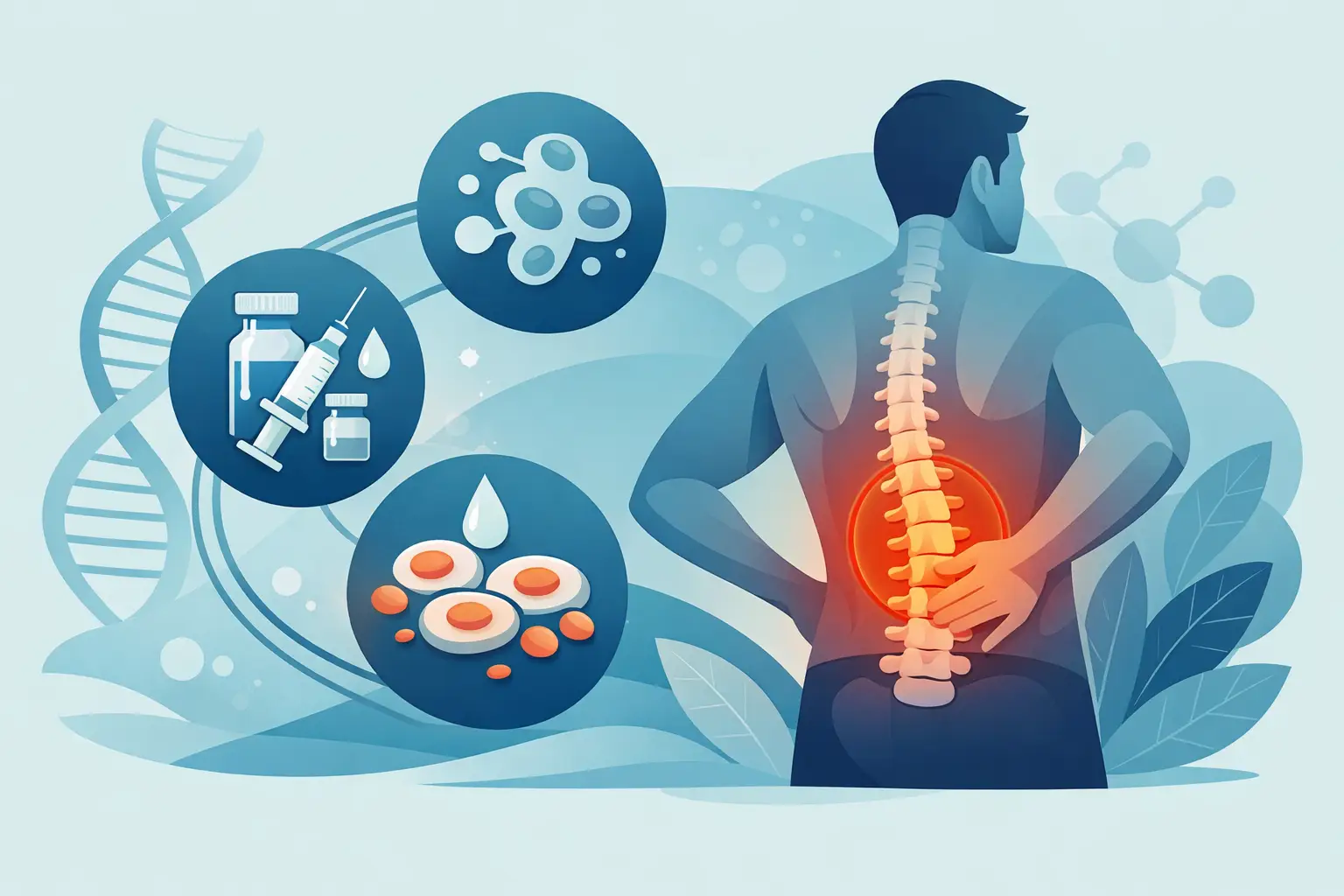
Top Regenerative Options for Back Pain Explained
Back pain can shrink a person’s world long before it appears dramatic on an MRI. The walk becomes shorter, sleep becomes lighter, travel requires planning, and the activities that once created energy begin to demand it. For patients looking beyond repeated pain medication, temporary injections, or a rushed path toward surgery, the top regenerative options for back pain may offer a more biologically focused conversation.
Regenerative medicine is not a single treatment, and it is not a promise that every damaged disc, arthritic joint, or irritated nerve can be restored. It is a carefully selected set of approaches designed to support the body’s repair response, manage inflammation, and improve the environment around painful spinal structures. The most appropriate option depends on the source of pain, the degree of degeneration, overall health, and realistic treatment goals.
Why identifying the pain source comes first
“Back pain” is a broad description, not a diagnosis. Pain can arise from an intervertebral disc, facet joints, sacroiliac joints, spinal ligaments, muscles, nerve roots, vertebral compression fractures, or conditions outside the spine entirely. A treatment that may be considered for arthritic facet joints is not automatically appropriate for a severely compressed nerve caused by spinal stenosis.
A high-quality regenerative assessment begins with a detailed history, physical examination, imaging review, and, when needed, laboratory testing. The goal is to understand whether symptoms are primarily mechanical, inflammatory, degenerative, or neurologic. This evaluation also helps identify circumstances that need conventional urgent care, such as new bowel or bladder changes, progressive weakness, fever, unexplained weight loss, or pain following serious trauma.
Regenerative treatment is often most compelling when there is a defined tissue target and when standard conservative care has not produced sufficient relief. Physical therapy, movement correction, weight management, sleep support, and appropriate medical care remain central to long-term spinal health. Biologic procedures work best as part of a wider recovery plan rather than as a standalone shortcut.
Top regenerative options for back pain
Platelet-rich plasma therapy
Platelet-rich plasma, commonly called PRP, uses a concentrated portion of a patient’s own blood. Platelets contain signaling proteins and growth factors involved in tissue repair. After a blood draw and processing step, the prepared PRP may be injected into selected structures under imaging guidance, depending on the clinical plan.
For back pain, PRP is commonly considered for soft-tissue injuries and certain degenerative pain patterns involving spinal ligaments, muscles, facet joints, or sacroiliac joints. It may also be discussed in carefully selected disc-related cases. Because the material comes from the patient’s own blood, PRP appeals to people seeking an autologous, minimally invasive approach.
The trade-off is that PRP preparations are not identical. Platelet concentration, white blood cell content, injection technique, and the tissue being treated can all influence the experience and potential result. Research is still developing, particularly for disc-related pain, so patients should be wary of claims that PRP can reliably “regrow” a severely degenerated disc. Temporary soreness after treatment is common as the body responds to the procedure.
Bone marrow concentrate
Bone marrow concentrate, or BMC, is another autologous biologic approach. A clinician collects a small amount of bone marrow, often from the pelvic bone, and processes it to concentrate cells, platelets, and naturally occurring signaling components. The final preparation may contain progenitor cells that participate in the body’s repair processes.
BMC is often considered when a patient has more established degenerative changes or when a physician believes a more cell-rich autologous option may be appropriate. Depending on the diagnosis, it may be used in treatment plans targeting facet joints, sacroiliac joints, supporting soft tissues, or selected spinal structures.
This approach is more involved than PRP because it requires a bone marrow aspiration. It should be performed by experienced medical professionals with careful attention to sterility, imaging guidance, patient comfort, and post-procedure monitoring. BMC is not a universal alternative to spine surgery, and its role for disc degeneration remains an area of active clinical interest rather than settled science.
Cell-based regenerative programs
Cell-based programs are among the most sought-after advanced options in regenerative medicine. These protocols may incorporate mesenchymal stromal cells, progenitor-cell approaches, or other biologic components selected as part of a physician-led treatment plan. The scientific rationale centers on cellular signaling: certain cells may influence inflammatory pathways and communicate with surrounding tissues through paracrine factors.
For patients with chronic degenerative back pain, cell-based care may be considered when symptoms are persistent, function is declining, and a broader biologic strategy is being explored. Some international clinics provide customized programs that combine local procedures with intravenous infusions, rehabilitation guidance, nutritional support, and longevity-focused care.
Patients deserve clarity about the evidence and regulatory landscape. In the United States, many stem cell products and uses marketed for orthopedic or spinal conditions are not FDA-approved, and the quality of products and protocols varies significantly between providers. Cell-based treatment should never be presented as a guaranteed cure for a herniated disc, spinal stenosis, or chronic pain. A responsible clinic will explain the cell source, handling standards, expected benefits, possible risks, alternatives, and the limits of current clinical evidence before treatment.
Adjunctive biologic and recovery support
The spine does not function in isolation. Hip mobility, core endurance, posture, inflammation, metabolic health, and nervous-system sensitivity can all influence how back pain is felt. For that reason, some regenerative plans include supportive measures alongside PRP, BMC, or cell-based procedures.
These may include targeted physical rehabilitation, guided mobility work, nutritional strategies, anti-inflammatory lifestyle support, and medically supervised infusion programs where clinically appropriate. The purpose is not to add treatments for the sake of complexity. It is to create conditions in which improved movement, healthier tissue loading, and recovery behaviors can reinforce a biologic intervention.
Who may be a candidate?
The strongest candidates are often adults with persistent, well-characterized pain related to degenerative or soft-tissue conditions who want to explore options before, after, or alongside conventional interventions. Athletes with recurrent strain patterns, active adults with early degenerative change, and older patients aiming to preserve mobility may all have different goals and treatment considerations.
Candidates should have a diagnosis that matches the procedure being considered and be able to follow the rehabilitation plan afterward. Smoking, uncontrolled diabetes, active infection, certain blood disorders, untreated cancer, severe osteoporosis, and use of particular medications may affect eligibility. People with significant nerve compression or spinal instability may require surgical evaluation rather than a regenerative procedure alone.
A premium medical program should not treat every scan finding. Imaging often shows age-related changes that are not necessarily the source of pain. The decision should be based on the relationship between symptoms, physical findings, imaging, and the patient’s functional goals.
Questions to ask before choosing a provider
Patients considering regenerative care should expect direct, specific answers. Ask what structure is believed to be causing pain, why a particular biologic is recommended, and whether the procedure will be performed with fluoroscopy or ultrasound guidance. Ask how the product is sourced and prepared, what training the treating physician has, and what complications have been discussed.
It is equally reasonable to ask about the likely timeline. Some patients notice changes gradually over weeks or months rather than immediately. Others may have partial improvement or no meaningful benefit. Pain scores matter, but so do practical outcomes: walking farther, returning to training, sleeping more comfortably, sitting through a flight, or reducing dependence on medication.
At CellStemClinic, a regenerative consultation should be viewed as a decision-making process, not simply a treatment booking. The best plan is individualized, medically supervised, and honest about both opportunity and uncertainty.
Back pain treatment becomes more hopeful when the conversation moves beyond merely suppressing symptoms and toward preserving function, movement, and quality of life. The right next step is a thorough evaluation that respects both the promise of regenerative medicine and the unique biology of your spine.

