

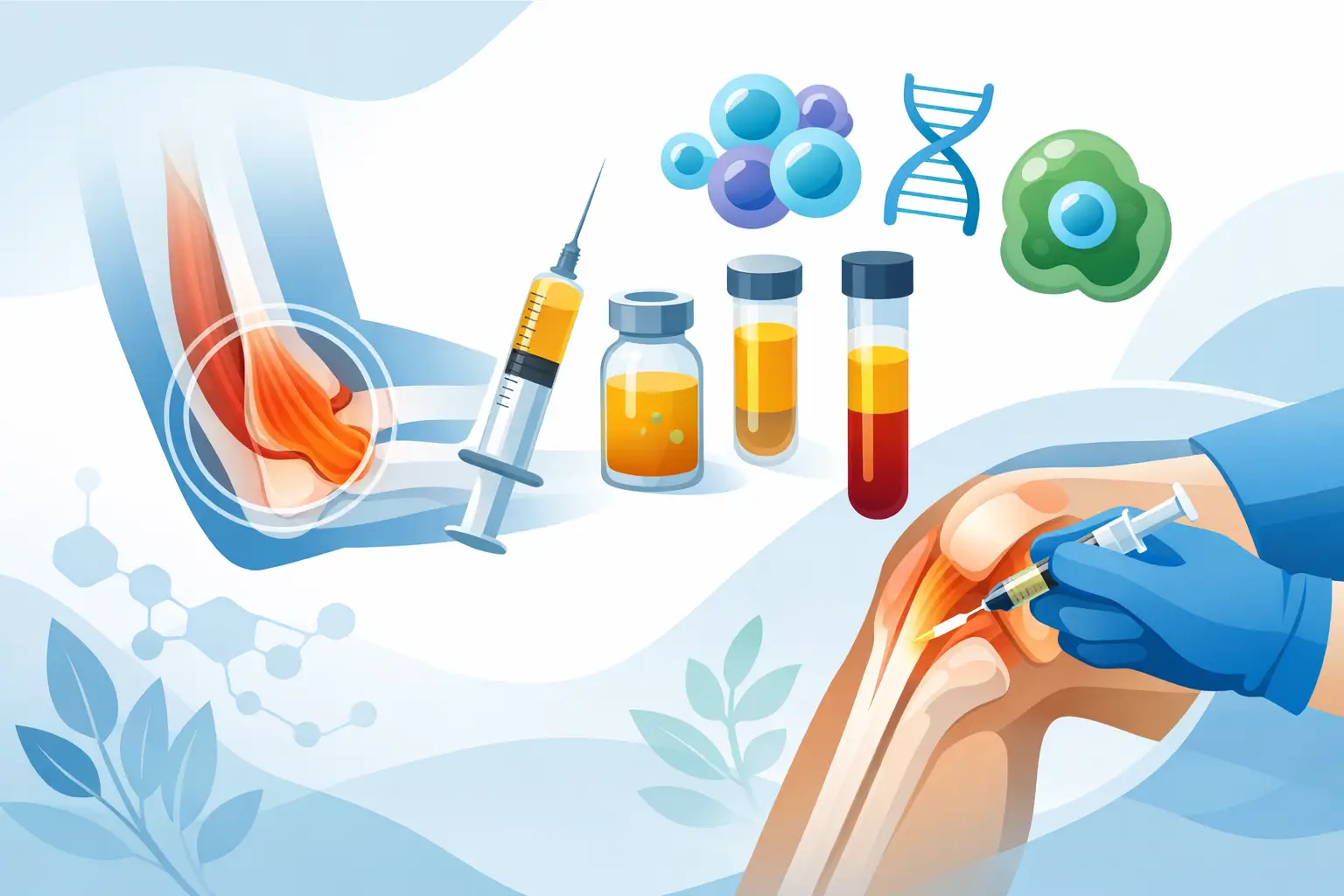
Best Biologic Treatments for Tendon Injuries
A torn or chronically painful tendon can make even simple movement feel uncertain. Whether the problem involves the Achilles, rotator cuff, patellar tendon, tennis elbow, or gluteal tendons, healing is often slow because tendons have a limited blood supply and must withstand repeated load. For patients seeking more than short-term symptom management, the best biologic treatments for tendon injuries may offer a regenerative, doctor-led option when paired with a carefully structured rehabilitation plan.
Biologic treatment is not a single procedure. It is a category of therapies designed to use the body’s own healing signals, cells, and growth factors to support tissue repair. The right approach depends on the tendon involved, the extent and age of the injury, activity goals, imaging findings, and whether conservative treatment has already been exhausted.
Why tendon injuries can become persistent
Tendons connect muscle to bone, transferring force every time you walk, lift, run, reach, or jump. An acute tear may occur after a sudden overload, but many tendon conditions develop gradually. Repetitive strain, poor biomechanics, reduced tissue quality with age, metabolic conditions, certain medications, and an abrupt increase in training load can all contribute to tendinopathy.
In chronic tendinopathy, the issue is not always classic inflammation. The tendon may become thickened, disorganized, and less able to tolerate force. Rest alone can reduce pain temporarily, yet it rarely restores the tendon’s capacity. This is why progressive loading remains central to recovery, even when advanced biologic procedures are being considered.
Best biologic treatments for tendon injuries: what to consider
The word “best” should never mean one-size-fits-all. A high-quality treatment plan matches the biologic to the clinical problem and uses imaging, medical screening, and rehabilitation to guide each decision. Three commonly discussed options are platelet-rich plasma, bone marrow concentrate, and cell-based regenerative therapies.
Platelet-rich plasma for focused healing support
Platelet-rich plasma, or PRP, is created from a small sample of the patient’s own blood. The blood is processed to concentrate platelets, which contain signaling proteins involved in the body’s normal repair response. The prepared PRP is then injected into or around the affected tendon, typically with ultrasound guidance for accuracy.
PRP is often considered for chronic tendinopathy that has not improved sufficiently with physical therapy, activity modification, and other conservative care. It is widely used for conditions such as tennis elbow, patellar tendinopathy, plantar fascia-related pain, and some Achilles or rotator cuff disorders.
Its appeal is straightforward: it is autologous, meaning it comes from the patient’s own blood, and it can be delivered directly to the treatment area. However, PRP is not standardized across every clinic or study. Platelet concentration, white blood cell content, injection technique, and post-procedure rehabilitation can all affect outcomes. Evidence is encouraging for some conditions and mixed for others, so an experienced physician should explain where PRP is most likely to be appropriate.
Bone marrow concentrate for more complex cases
Bone marrow concentrate, often called BMC, is derived from bone marrow aspirated from the patient, commonly from the pelvic bone. After processing, the concentrate contains a mix of cells and biologically active components, including progenitor cells, platelets, and growth factors. It may be considered when tendon degeneration is more advanced, when there is a partial tear, or when a patient has not responded to simpler interventions.
Compared with PRP, BMC is a more involved procedure. It requires marrow aspiration as well as injection, making patient selection and medical supervision especially important. The potential advantage is its broader biologic composition, which may support the local healing environment in complex musculoskeletal cases.
Clinical evidence for BMC in tendon care is still evolving. For the right patient, it can be a valuable part of an individualized regenerative strategy, but it should not be positioned as a guaranteed replacement for surgery or rehabilitation. Imaging and a thorough orthopedic assessment help determine whether the tendon remains a suitable candidate for a biologic approach.
Cell-based regenerative therapies and tendon repair
Cell-based therapies are of strong interest in regenerative medicine because mesenchymal stromal cells and related cellular products may influence inflammation, cellular signaling, and tissue repair processes. In carefully selected cases, these therapies may be discussed as part of an advanced treatment pathway for degenerative musculoskeletal conditions.
This area requires particular care and transparency. Cell-based interventions for tendon injuries are not universally approved as standard orthopedic treatment in the United States, and the quality of products, processing methods, regulation, and clinical evidence varies substantially. Patients should be wary of broad promises, vague descriptions of what is being injected, or clinics that minimize the need for proper diagnosis and follow-up.
A medically responsible program should clearly explain the proposed cell source, the intended role of the treatment, known limitations, potential risks, and the regulatory status relevant to the patient’s location. The most credible regenerative care does not oversell biology. It combines innovation with careful clinical judgment.
The procedure matters as much as the product
Even a well-chosen biologic treatment can underperform if it is delivered without precision or followed by an unsuitable recovery plan. Ultrasound guidance helps the physician identify tendon thickening, partial defects, calcification, and surrounding structures while placing an injection accurately.
After treatment, the tendon needs a staged return to load. The first phase may involve short-term protection and pain management. This is followed by progressively more demanding strengthening, often beginning with isometric exercises and advancing to heavy slow resistance, eccentric work, and sport-specific movement. The pace depends on the tendon and the individual. An elite runner recovering from an Achilles injury has different demands than someone hoping to walk comfortably without heel pain.
It is also common for symptoms to fluctuate during recovery. Biologic procedures are intended to support the repair environment, not eliminate the biological time required for tendon remodeling. Meaningful improvements may develop over weeks to months rather than days.
Who may be a candidate for biologic tendon treatment?
Biologic treatment may be worth exploring for adults with chronic tendon pain, imaging-confirmed degeneration, a partial tendon injury, or symptoms that continue despite a properly performed course of physical therapy. It can also be relevant for active patients who want to preserve function and reduce the risk of ongoing tissue decline without moving immediately to surgery.
Not every tendon injury is suitable. A complete rupture, severe retraction, major loss of function, infection, uncontrolled systemic illness, or suspected inflammatory arthritis may require a different pathway. Some patients need surgical evaluation promptly, particularly when there is sudden weakness, a visible deformity, inability to bear weight, or loss of normal movement after an injury.
A comprehensive assessment should include the patient’s health history, medications, activity profile, prior treatments, and imaging where appropriate. High-quality care also considers factors that can impair healing, including smoking, poor blood sugar control, nutritional deficiencies, sleep disruption, and training errors.
Risks, expectations, and informed decisions
Autologous procedures such as PRP and BMC generally use a patient’s own biological material, but they are still medical procedures. Temporary pain, swelling, bruising, infection, bleeding, nerve irritation, and lack of improvement are possible. BMC also carries discomfort and procedural risks at the aspiration site.
The goal is not to chase the newest intervention. It is to make an informed choice that balances evidence, risk, cost, recovery demands, and personal goals. A premium regenerative program should provide clarity on all of these points before treatment begins.
At CellStemClinic, tendon care can be approached as part of a wider regenerative health strategy, with physician-led assessment and individualized consideration of PRP, BMC, and advanced cellular pathways where clinically appropriate. The strongest outcomes are usually built through precision diagnosis, thoughtful biologic selection, and disciplined rehabilitation.
If a tendon injury has kept you from training, working, traveling, or simply moving with confidence, seek an evaluation that looks beyond pain alone. The most useful next step is a plan that respects both the science of regeneration and the practical work of restoring strength.

