

Can BMC Treat Disc Pain? A Regenerative View
A disc can look damaged on an MRI and cause no symptoms at all. Conversely, a relatively modest-looking disc change can be associated with persistent low back pain that limits sleep, travel, exercise, and work. That is why the question, can BMC treat disc pain, deserves more than a simple yes or no. Bone marrow concentrate may be a promising regenerative option for selected patients, but it is not a universal answer for every painful spine.
Can BMC Treat Disc Pain?
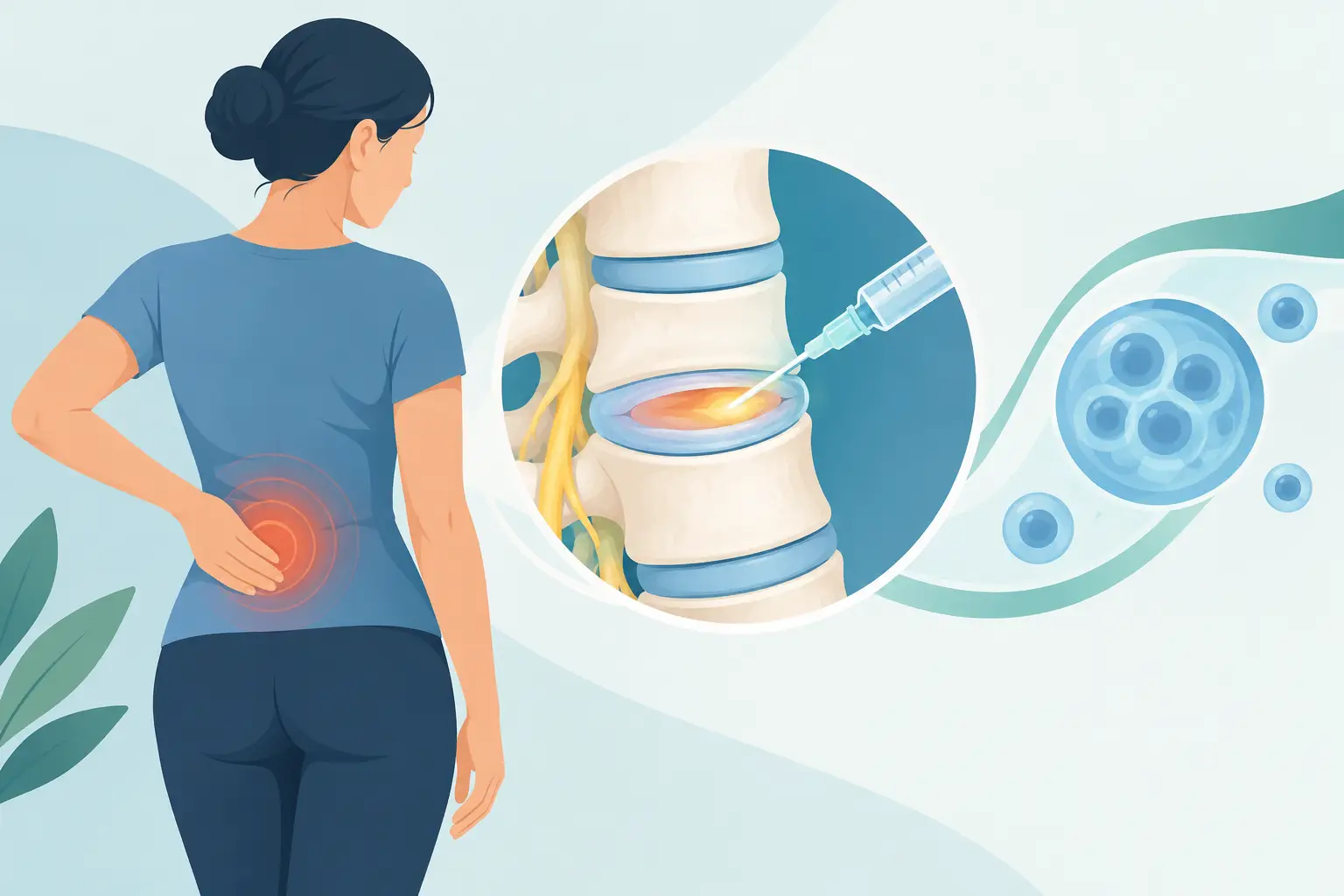
Bone marrow concentrate, often called BMC, is an autologous biologic treatment created from a patient’s own bone marrow, usually collected from the back of the pelvic bone. The sample is processed to concentrate platelets, growth factors, nucleated cells, and naturally occurring progenitor cells. Depending on the treatment plan, the concentrate may be placed near or within a targeted area under image guidance.
The clinical aim is not simply to mask discomfort. BMC is intended to support the body’s repair environment by influencing inflammation, cellular signaling, and tissue recovery. In the setting of disc-related pain, this may help some patients experience improved comfort, mobility, and day-to-day function.
However, BMC does not guarantee that a worn or dehydrated disc will return to its original youthful structure. Degenerative disc disease is a complex process involving changes to the disc, surrounding joints, spinal mechanics, nerves, muscles, and inflammatory pathways. The most appropriate candidates are those whose symptoms, examination, and imaging point toward a disc-related pain generator rather than an unrelated source.
Why Discs Become Painful
Spinal discs are the cushions between the bones of the spine. Their outer ring, called the annulus, surrounds a softer inner core. With age, repetitive loading, injury, genetics, smoking, poor metabolic health, or previous surgery, discs can lose hydration and resilience. Small tears in the outer ring may also develop.
Not every degenerative disc is painful. Pain may arise when inflammatory signals irritate sensitive structures, when an annular tear becomes symptomatic, or when disc changes affect nearby nerves. A bulging or herniated disc can cause leg pain, tingling, numbness, or weakness when it irritates a nerve root. By contrast, discogenic low back pain is often felt more centrally in the lower back and may worsen with sitting, bending, lifting, or prolonged driving.
This distinction matters. A person with primarily nerve compression from a large disc herniation may need a very different treatment pathway from someone with chronic axial back pain and early-to-moderate disc degeneration.
What the Evidence Says About BMC for Disc Pain
Regenerative medicine for spinal disc conditions is an active and evolving area of research. Early clinical studies and case series have reported improvement in pain scores and function for some patients treated with bone marrow-derived biologics. These findings are encouraging, particularly for people seeking options beyond repeated medication use, injections aimed only at short-term symptom control, or surgery.
At the same time, the evidence has limits. Published studies vary substantially in how bone marrow is collected and processed, which patients are included, whether the material is injected into the disc or around it, and how outcomes are measured. Many studies are small, and high-quality long-term comparative research is still needed.
For U.S. patients, it is also important to understand that BMC procedures for disc degeneration are generally not FDA-approved treatments to regrow spinal discs. A responsible regenerative medicine program should discuss the investigational nature of biologic approaches, explain the known and unknowns, and avoid promising a cure.
The most meaningful question is often not whether BMC works in every case. It is whether the treatment has a reasonable biological rationale and risk-benefit profile for your diagnosis, spinal anatomy, goals, and overall health.
Who May Be a Candidate for BMC Disc Treatment?
Patients who may be considered for an individualized BMC evaluation often have chronic low back pain that has persisted despite a thoughtful course of conservative care. They may have imaging that shows disc degeneration at one or a small number of levels, while still retaining enough disc structure for a biologic strategy to be considered. They may also be motivated to improve movement, reduce reliance on pain medication, and protect long-term spinal function.
Candidacy is not determined by an MRI alone. A physician should review your medical history, pattern of pain, physical examination, prior treatments, and current scans. It is also necessary to consider factors such as diabetes control, smoking status, osteoporosis, blood-thinning medications, immune conditions, and previous spinal procedures.
BMC may be less suitable when there is marked spinal instability, severe disc collapse, advanced nerve compression, a fracture, active infection, cancer, or a condition requiring urgent surgical care. New bowel or bladder dysfunction, progressive weakness, numbness in the groin area, fever with severe back pain, or significant trauma should be assessed urgently rather than treated as a routine regenerative concern.
What a BMC Procedure May Involve
A treatment journey should begin with a detailed medical consultation and a review of imaging. If BMC is considered appropriate, bone marrow is commonly aspirated from the iliac crest, the broad upper portion of the pelvis. The sample is then processed to create a concentrated biologic preparation.
If the plan includes a spinal injection, precision is essential. The physician typically uses fluoroscopic or other image guidance to confirm accurate placement and to minimize unnecessary trauma to surrounding structures. Local anesthetic and, in some settings, light sedation may be used. Although many patients find the process manageable, it should not be described as painless for every person.
After treatment, activity is often modified for a short period before a gradual return to a guided rehabilitation plan. The procedure itself is only one part of the strategy. Core stability, hip mobility, posture, sleep, body composition, nutrition, and progressive strength work can all influence whether a painful spine becomes more resilient over time.
BMC Is Not a Replacement for Every Disc Treatment
A regenerative approach can sit alongside conventional spine care rather than compete with it. Physical therapy remains central for many disc conditions because improved movement control and muscular support can reduce mechanical stress on sensitive structures. Anti-inflammatory medications may help during flares, although they do not repair disc tissue. Epidural injections can be useful when nerve inflammation is the primary concern, while surgery may be the most appropriate option for severe compression, instability, or progressive neurological loss.
Platelet-rich plasma, or PRP, may also be discussed in some regenerative care plans. PRP and BMC are not identical treatments. PRP primarily concentrates platelets and their signaling molecules, whereas BMC contains a broader cellular and growth-factor profile. The right choice depends on the target tissue, severity of degeneration, treatment history, and physician assessment.
Patients should be cautious with clinics that treat every back pain diagnosis as a stem cell problem. A premium regenerative program begins with diagnostic clarity, not a preselected procedure.
Questions Worth Asking Before Treatment
Before choosing BMC for disc pain, ask the treating physician how they have identified the disc as the likely pain source and what alternatives have been considered. Ask whether the procedure is intradiscal, adjacent to the disc, or directed toward another spinal structure. You should also understand the expected recovery process, the potential risks, the plan if symptoms do not improve, and how outcomes will be measured over time.
Risks can include temporary soreness at the bone marrow collection site or injection site, bleeding, infection, nerve irritation, and lack of benefit. Intradiscal procedures carry particular technical considerations because the disc is a deep spinal structure. Individual risk varies, which is why a thorough review of medical history and imaging is essential.
Setting Realistic Expectations for Recovery
When BMC helps, the desired outcome is usually progressive improvement rather than an overnight change. Some patients notice shifts in pain or mobility within weeks, while others may require several months to judge their response. The most useful measures are practical: walking farther, sitting more comfortably, sleeping with fewer interruptions, returning to exercise, or relying less on pain medication.
A regenerative procedure is best viewed as an opportunity to support healing in the right biological and mechanical environment. It works most thoughtfully when paired with a personalized rehabilitation and lifestyle plan designed to protect the spine long after the procedure day.
For patients considering advanced options, the next step is not to chase the strongest promise. It is to seek a careful, physician-led assessment that identifies what is actually driving the pain and whether BMC has a credible role in restoring comfort, confidence, and movement.

