

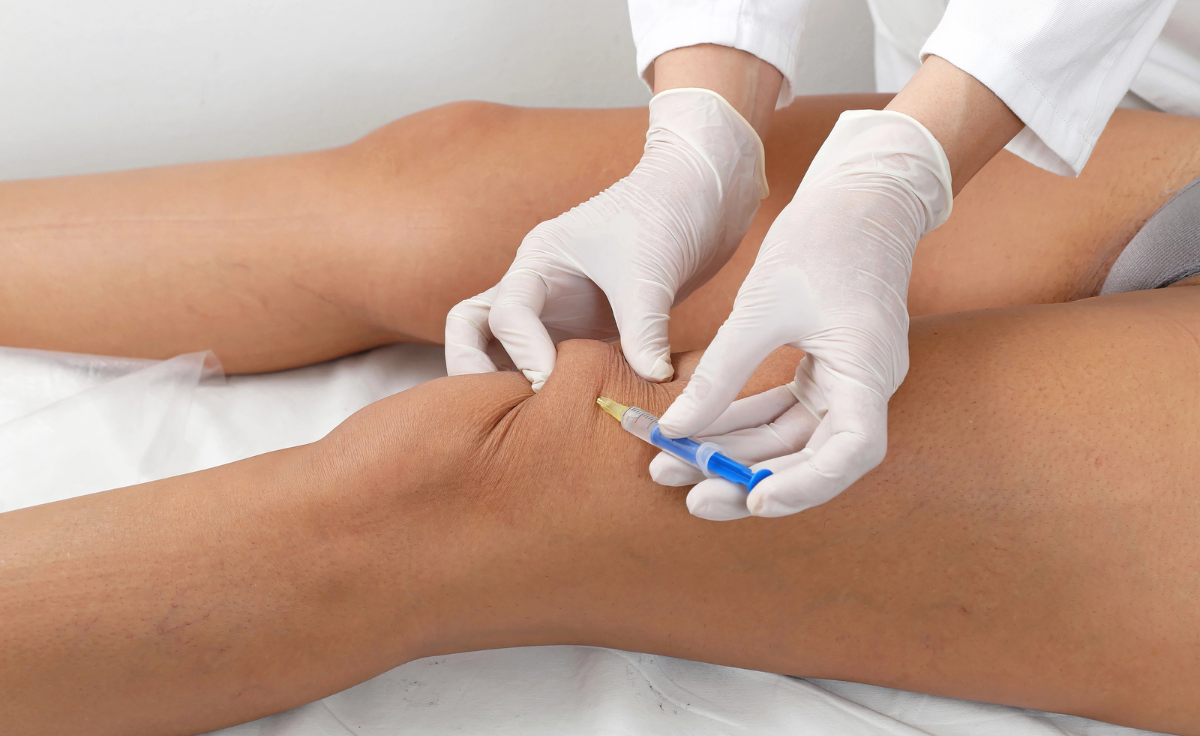
A Guide to Biologic Injections for Better Mobility
Pain that limits a morning walk, a favorite sport, or a full night’s sleep is rarely just a minor inconvenience. A thoughtful guide to biologic injections begins with a different question: can the body’s own healing signals be used to support recovery in tissues that have become irritated, injured, or slow to repair?
Biologic injections are a category of physician-directed treatments that use substances derived from the patient’s own body, or carefully prepared biological materials, to influence the healing environment. In regenerative medicine, they are often considered for joint discomfort, tendon and ligament injuries, degenerative changes, and selected inflammatory concerns. They are not a substitute for a precise diagnosis, rehabilitation, or appropriate conventional care. For the right candidate, however, they may be a valuable part of a personalized plan focused on function, mobility, and long-term quality of life.
What Are Biologic Injections?
The word “biologic” describes a treatment made from or involving biological material. In musculoskeletal and regenerative settings, the most common examples are platelet-rich plasma, or PRP, and bone marrow concentrate, often called BMC. Depending on the clinical setting and local regulations, a physician may also discuss other biologic or cellular approaches.
Unlike a corticosteroid injection, which is primarily used to reduce inflammation and can offer short-term symptom relief, a biologic injection is intended to influence the local repair response. This distinction matters. The goal is generally not to mask pain for a few weeks, but to create more favorable conditions for healing and tissue support. Results vary according to the condition, the severity of tissue damage, the injection technique, overall health, and how carefully the recovery program is followed.
Biologic treatment should never be presented as a universal cure. Some conditions have stronger clinical evidence than others, and some patients will be better served by physical therapy, medication, surgery, or a combined approach. A responsible regenerative program starts with clarity about what treatment can reasonably aim to improve.
A Guide to Biologic Injections: The Main Options
Platelet-Rich Plasma (PRP)
PRP is prepared from a small sample of the patient’s blood. After processing, the platelet-rich portion is concentrated and injected into the targeted area. Platelets are known for their role in clotting, but they also carry signaling proteins involved in the body’s normal healing process.
PRP is commonly discussed for tendon concerns, mild-to-moderate osteoarthritis, certain ligament injuries, and soft-tissue recovery. It is an appealing option for patients who want a minimally invasive treatment using their own blood components. Protocols differ, including the concentration of platelets, whether white blood cells are included, the number of injections recommended, and the precise location of placement. These details can affect both the treatment experience and potential outcome.
Bone Marrow Concentrate (BMC)
Bone marrow concentrate is produced from bone marrow aspirated by a trained physician, often from the back of the pelvic bone. The sample is processed to concentrate several naturally occurring components, including cells, platelets, and growth-factor-rich materials.
BMC is often considered when a patient has more significant joint degeneration, cartilage-related concerns, or a complex orthopedic history. It is more involved than PRP because it requires a harvesting procedure, yet it remains an autologous approach, meaning the material comes from the patient’s own body. The choice between PRP and BMC is not simply a question of which option is “stronger.” It depends on the tissue involved, imaging findings, health history, treatment goals, and the clinician’s assessment of expected benefit versus burden.
Other Cellular and Biologic Procedures
The regenerative medicine field continues to develop rapidly. Some clinics offer adjunctive cellular or tissue-based procedures alongside PRP or BMC, particularly within broader programs for recovery, inflammation management, or age-related functional decline. These therapies require especially careful clinical oversight, transparent consent, and an understanding of the regulatory framework where treatment is provided.
Patients should ask exactly what material is being used, how it is processed, why it is recommended, and what evidence is relevant to their specific condition. Terms such as “stem cell” and “regenerative” can describe very different procedures. A reputable clinic will explain the distinction in plain language rather than relying on broad promises.
Who May Be a Candidate?
The best candidates are not defined by age alone. A highly active 45-year-old with a chronic tendon injury and a 72-year-old with early knee degeneration may both be appropriate candidates, but their plans should look different. The first may need a strategy centered on load management and return to sport. The second may need a plan that integrates injections with strength training, weight management, gait assessment, and joint-preserving care.
Biologic injections may be considered for adults with persistent joint pain, mild-to-moderate osteoarthritis, tendon or ligament injuries, muscle injuries, or slow recovery after certain orthopedic procedures. They may also be explored by athletes seeking structured recovery support. The key is to identify the source of symptoms before treatment. Shoulder pain can arise from the rotator cuff, arthritis, the neck, or referred pain patterns. Treating the wrong structure will not create the result a patient is hoping for.
A thorough consultation should review medical history, current medications, previous procedures, allergies, bleeding risk, immune conditions, and recent imaging when appropriate. Certain medical conditions, active infection, uncontrolled bleeding disorders, and some medication regimens may make a procedure unsuitable or require additional precautions.
What Happens During Treatment?
A high-quality biologic procedure begins well before the injection. The clinician should establish a diagnosis through examination and, when needed, imaging such as ultrasound, MRI, or X-ray. Imaging guidance during the injection can improve accuracy by helping the physician place the biologic material at the intended tissue site.
For PRP, blood is drawn and processed during the appointment. For BMC, the physician numbs the harvest area before collecting bone marrow and preparing the concentrate. The final injection is typically completed under sterile conditions. Patients may experience pressure, soreness, or a temporary increase in discomfort afterward, particularly when treating joints or tendons.
Recovery is not passive. Many patients are advised to modify activity briefly, then progress through a tailored rehabilitation plan. The appropriate timeline differs by treatment area. A tendon may require gradual loading over weeks, while an arthritic knee may benefit from a measured return to low-impact movement and strengthening. Immediate, dramatic improvement is not the usual benchmark for biologic treatment. When benefits occur, they may develop progressively as the tissue responds and the body adapts to rehabilitation.
Safety, Evidence, and Questions Worth Asking
Autologous biologic injections use a patient’s own material, which may reduce certain compatibility concerns. Still, “natural” does not mean risk-free. Possible effects include temporary pain, swelling, bruising, infection, bleeding, nerve irritation, and failure to achieve the desired benefit. Bone marrow harvesting adds its own procedural considerations.
Evidence for PRP and BMC is evolving and varies by diagnosis. PRP has been studied more extensively in some orthopedic applications than others, while BMC research remains an active area with differing protocols and outcomes. Patients deserve an honest discussion about uncertainty, alternatives, cost, and the likelihood that additional treatment may be needed.
Before committing, ask whether the diagnosis has been confirmed, whether the injection will be image-guided, what biologic preparation is proposed, and what recovery plan follows. It is also reasonable to ask what outcomes the clinician expects to measure, such as pain levels, walking tolerance, range of motion, strength, or return to a valued activity. A treatment plan should be built around meaningful function, not an impressive-sounding procedure alone.
Building a Regenerative Plan Around the Patient
The injection itself is only one part of regenerative care. Sleep quality, nutrition, metabolic health, inflammation, mobility, muscle strength, and stress can all influence recovery capacity. For patients with chronic or degenerative conditions, a more complete program may pair biologic procedures with targeted rehabilitation, lifestyle optimization, and follow-up assessments.
At CellStemClinic, this personalized perspective is central to the conversation. Advanced biologic procedures are considered within a physician-led plan that respects the patient’s diagnosis, biology, goals, and tolerance for recovery. For some, PRP may be the appropriate first step. For others, BMC, a broader regenerative strategy, or a conventional referral may be the wiser direction.
The most promising path is not the one with the boldest claim. It is the one that begins with a careful diagnosis, uses an appropriate treatment with skilled medical supervision, and gives your body the support and time it needs to pursue meaningful recovery.

