

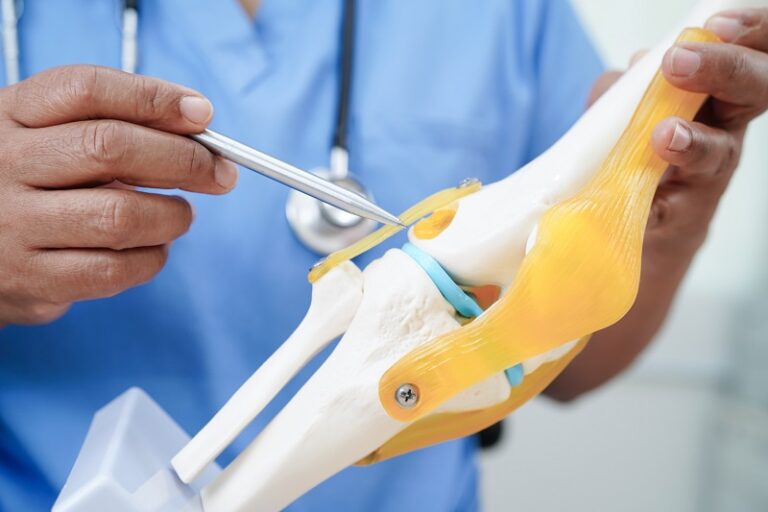
How BMC Helps Joint Repair for Lasting Mobility
A stiff knee on the stairs, a shoulder that catches during tennis, or hip pain that limits a favorite walk can gradually shrink a person’s world. Understanding how BMC helps joint repair begins with a simple principle: bone marrow contains naturally occurring cells and signaling factors involved in the body’s response to tissue injury. When carefully concentrated and placed into an appropriate joint area, these components may support the biological environment needed for recovery.
For patients seeking options beyond repeated pain medication or a wait-and-see approach, bone marrow concentrate therapy offers a personalized, doctor-led regenerative pathway. It is not a replacement for every orthopedic treatment, and it cannot reverse severe structural damage in every case. Yet for carefully selected patients, BMC may be a valuable adjunct in a broader plan focused on comfort, function, and long-term mobility.
What Is Bone Marrow Concentrate?
Bone marrow concentrate, often called BMC, is prepared from a small sample of a patient’s own bone marrow, commonly collected from the back of the pelvic bone. The sample is processed in a specialized centrifuge to concentrate selected cellular components and growth factors before it is administered to the targeted area.
BMC is an autologous treatment, meaning it uses the patient’s own biological material. The concentrate may contain mesenchymal stromal cells, hematopoietic cells, platelets, cytokines, and other progenitor cells. These elements do not act as a simple replacement part for worn cartilage. Instead, they are thought to communicate with surrounding tissues, influence inflammation, and support the body’s natural repair processes.
This distinction matters. Joint degeneration is rarely caused by one problem alone. Cartilage wear may occur alongside irritation of the joint lining, changes in the underlying bone, tendon or ligament stress, muscle weakness, altered movement patterns, and persistent inflammation. A regenerative strategy must be assessed in the context of the whole joint, not as a one-size-fits-all injection.
How BMC Helps Joint Repair at a Cellular Level
The promise of BMC lies in its potential to improve the local healing environment. Following an injury or during chronic degeneration, the body may struggle to coordinate an effective repair response. Age, repetitive loading, prior surgery, metabolic health, and the degree of tissue damage can all affect that response.
BMC delivers a concentrated mix of the patient’s own cells and biological signals to the area of concern. Research suggests these components may help regulate inflammatory activity, support blood vessel signaling where appropriate, and encourage communication between cells involved in tissue maintenance. Rather than forcing a joint to heal, BMC is designed to support the conditions in which the body can carry out its own restorative work.
For cartilage-related concerns, this is particularly nuanced. Articular cartilage has a limited natural blood supply and does not reliably regenerate once significantly damaged. BMC should not be presented as a guaranteed way to regrow cartilage or eliminate the need for joint replacement. However, some patients may experience meaningful improvements in pain, movement, or activity tolerance when BMC is incorporated into a well-designed orthopedic care plan.
Its anti-inflammatory signaling may be equally relevant. In osteoarthritis and certain overuse conditions, inflammation can contribute to pain and accelerate tissue stress. By modulating aspects of this inflammatory environment, BMC may help some patients move more comfortably while they work on strength, mobility, body weight, and activity modification.
Conditions That May Be Considered for BMC Therapy
A clinical assessment determines whether BMC is a reasonable option. It is often considered for chronic musculoskeletal conditions where pain, reduced mobility, or slow tissue recovery persists despite conservative care. Common areas of discussion include knee osteoarthritis, shoulder discomfort, hip-related pain, ankle issues, and certain tendon or ligament injuries.
Patients with early to moderate joint degeneration may have different goals and treatment potential than those with advanced bone-on-bone arthritis, major deformity, or mechanical instability. A patient with a focal cartilage injury after sport also requires a different assessment from someone with widespread age-related osteoarthritis.
BMC may be considered alongside platelet-rich plasma, physical rehabilitation, targeted nutrition, and lifestyle support. In some cases, imaging-guided procedures can help physicians place the concentrate with greater precision. The most appropriate approach depends on the joint involved, imaging findings, medical history, activity demands, and the patient’s willingness to follow a structured recovery plan.
The BMC Procedure: What Patients Can Expect
The treatment process starts with a detailed consultation and medical review. This typically includes discussion of symptoms, prior procedures, medications, imaging, health conditions, and treatment goals. The goal is not simply to identify a painful joint. It is to understand why the joint is under strain and whether regenerative treatment is medically appropriate.
During the procedure, bone marrow is aspirated under sterile conditions, often with local anesthesia and, when appropriate, additional comfort measures. Patients may feel pressure during the aspiration, but the procedure is generally designed to be well tolerated. The sample is then processed to create the concentrate.
The prepared BMC is administered to the selected area, often using image guidance when clinically indicated. Precision matters because joints and supporting tissues are anatomically complex. After treatment, patients are given personalized guidance on rest, gradual activity, rehabilitation, and follow-up.
Some soreness at the aspiration or injection site can occur in the days following treatment. Recovery timelines vary. While some patients notice changes within weeks, biological remodeling and functional improvement may take several months. A realistic plan accounts for this timeline rather than expecting an immediate transformation.
Why Rehabilitation Still Matters
BMC is most effective when viewed as part of a larger recovery strategy, not a standalone shortcut. A joint that has been painful for years may be surrounded by weak muscles, restricted movement, altered gait patterns, or poor load distribution. Even if symptoms improve, those mechanical issues can continue to stress the area.
A tailored rehabilitation program helps translate biological support into practical gains. This may involve progressive strength training, mobility work, balance exercises, gait correction, or sport-specific conditioning. For patients carrying excess weight, a sustainable weight-management strategy can also reduce joint loading and improve overall metabolic health.
The balance between protecting the treated area and restoring movement is individual. Too much activity too soon may aggravate symptoms, while prolonged inactivity can reduce strength and confidence. Ongoing guidance from qualified clinicians helps patients progress safely and with clear expectations.
Who May Not Be an Ideal Candidate?
BMC therapy requires careful medical screening. Active infection, certain blood disorders, uncontrolled systemic illness, or a condition requiring urgent surgical care may make treatment inappropriate or require further investigation first. Patients taking anticoagulants or other medications may need individualized planning.
It is also essential to be honest about advanced joint disease. When a joint has severe deformity, extensive cartilage loss, or a structural problem that requires surgical correction, BMC may offer limited benefit. It may still be discussed as part of symptom management in selected circumstances, but it should not delay necessary orthopedic intervention.
Evidence for orthopedic biologic therapies continues to develop, with outcomes varying across studies, conditions, preparation methods, and patient populations. A responsible clinician will explain what is known, what remains uncertain, and what results are realistic for your specific situation.
A Personalized Path Toward Joint Renewal
At CellStemClinic, BMC therapy is approached as a regenerative, medically supervised option for patients who want to explore a more biologically focused path to joint care. The process begins with understanding the person behind the scan: their mobility goals, pain pattern, lifestyle, medical history, and expectations for the future.
For some, the goal is returning to golf, travel, or regular exercise with greater confidence. For others, it is reducing daily discomfort and preserving independence. The most meaningful next step is a thorough orthopedic and regenerative medicine consultation that clarifies whether BMC belongs in your plan and what you can do alongside treatment to give your joints their best opportunity to recover.

