

Does PRP Treatment for Hair Restoration Work?
A widening part, more scalp showing through under bright light, or a hairline that no longer frames the face as it once did can feel deeply personal. PRP treatment for hair restoration is a physician-led biologic approach designed to support struggling hair follicles using concentrated components from your own blood. For the right patient, it may be a valuable part of a broader plan to preserve existing hair, improve hair caliber, and support a fuller-looking result over time.
It is not a replacement for a careful diagnosis, and it is not a promise of regrowing a full head of hair. Hair loss has several possible causes, from inherited pattern thinning and hormonal shifts to nutritional deficiencies, thyroid conditions, inflammatory scalp disease, medication changes, or the physical stress of illness. The quality of the assessment matters as much as the procedure itself.
How PRP Treatment for Hair Restoration Works
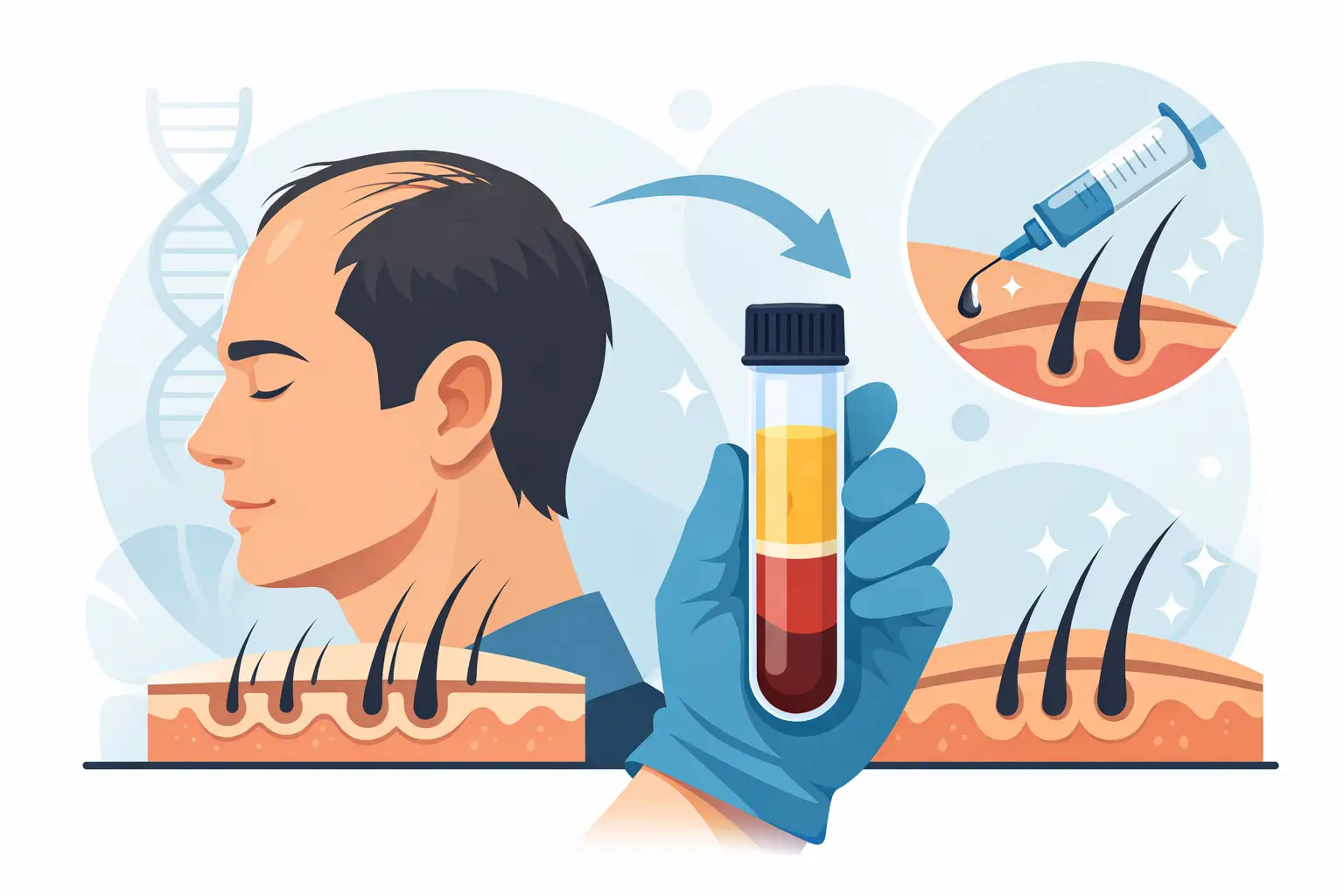
Platelet-rich plasma, or PRP, is prepared from a small sample of your blood. After the sample is processed in a centrifuge, the platelet-rich portion is separated and used for treatment. Platelets contain signaling proteins and growth factors involved in the body’s natural repair processes. When introduced into areas of thinning scalp, PRP is intended to create a more supportive environment around existing follicles.
Hair follicles are living mini-organs with an active growth phase, a transition phase, and a resting phase. In androgenetic alopecia, commonly called male- or female-pattern hair loss, follicles gradually become smaller over time. The hairs they produce may grow shorter, finer, and less pigmented before visible thinning develops. PRP does not create new follicles. Its potential role is to support follicles that are still present and capable of responding.
This distinction is essential. Areas that have been completely smooth and hairless for many years are less likely to respond than areas where thinning, miniaturized hairs, or early recession remain visible. Earlier intervention generally provides more opportunity to protect the hair you have.
Who May Be a Good Candidate?
PRP is most often considered for adults with early to moderate pattern hair thinning who want a minimally invasive, biologic option. It can appeal to patients who prefer to begin with their own concentrated blood components, are not ready for surgical restoration, or want an adjunct to a medically guided hair-preservation program.
Women experiencing diffuse thinning after hormonal changes and men with early crown or hairline thinning may be candidates, provided the underlying cause has been evaluated. Some patients also consider PRP after a period of increased shedding caused by stress, rapid weight change, illness, or postpartum hormonal changes. In these cases, timing matters. Temporary shedding can improve once the trigger resolves, while treatment may be considered when recovery is incomplete or pattern thinning is also present.
A consultation should look beyond the scalp. A clinician may review your medical history, medications, family history, diet, recent illness, menstrual or hormonal history where relevant, and hair-care practices. Blood testing may be appropriate when symptoms suggest iron deficiency, thyroid dysfunction, vitamin deficiencies, or another treatable contributor.
PRP may not be suitable for everyone. People with certain platelet disorders, active infection, uncontrolled medical conditions, significant bleeding disorders, or use of some blood-thinning medications may need a different approach or medical clearance. Active inflammatory or scarring forms of alopecia require specialist evaluation because delaying appropriate care can result in permanent follicle loss.
What Happens During a PRP Hair Session?
A PRP appointment is typically performed in a clinical setting and usually takes less than an hour, though preparation and treatment protocols vary. First, a small amount of blood is collected, similar to a routine blood draw. The sample is processed to concentrate platelet-rich plasma.
The scalp is then cleansed, and the clinician places small injections across the areas of concern. A topical numbing option or other comfort measures may be offered depending on the treatment plan and individual sensitivity. Most patients describe brief pressure or pinching rather than prolonged discomfort.
Because PRP uses your own blood, there is no donor material involved. However, it is still a medical procedure. Temporary tenderness, redness, pinpoint bleeding, bruising, swelling, or a mild headache can occur. Serious complications are uncommon when treatment is performed with appropriate sterile technique, but infection, allergic reactions to topical products or anesthetic, and unexpected inflammatory responses remain possible risks to discuss with your provider.
Most people return to normal daily activities shortly after treatment. Your clinician may advise avoiding strenuous exercise, excessive heat exposure, aggressive scalp massage, or certain anti-inflammatory medications for a short period. Aftercare should be individualized, particularly if you are using prescription hair-loss medication or have an underlying health condition.
What Results Can You Realistically Expect?
The strongest clinical interest in PRP has been for androgenetic alopecia. Research suggests that some patients may experience improvements in hair density, hair shaft thickness, shedding, or patient-reported satisfaction. Yet results vary considerably because studies use different preparation methods, platelet concentrations, injection techniques, schedules, and outcome measures.
This is why responsible expectations matter. PRP is not an instant cosmetic fix. Hair grows slowly, and follicles need time to move through their growth cycle. Some patients notice reduced shedding or improved hair texture first. Visible changes in density, if they occur, are usually assessed over several months rather than weeks.
A common approach involves an initial series of treatments spaced several weeks apart, followed by maintenance sessions based on response and clinical advice. The ideal schedule is not universal. Age, extent and pattern of loss, hormonal factors, scalp health, lifestyle, and the presence of other therapies all influence the plan.
Progress should be documented with consistent photographs taken under the same lighting, angle, hair length, and parting. This is far more useful than relying on day-to-day mirror checks, which can be influenced by styling, humidity, and natural fluctuations in shedding.
PRP Works Best as Part of a Personalized Strategy
For many patients, PRP is not a stand-alone answer. A comprehensive plan may include correction of nutritional or medical contributors, scalp-care guidance, stress and sleep support, and discussion of evidence-based prescription or topical options when appropriate. Some patients may also be candidates for surgical hair restoration, while others prefer to focus on preserving current density through non-surgical care.
The right combination depends on your diagnosis and priorities. Someone with early hereditary thinning may choose PRP alongside a medical therapy intended to slow follicle miniaturization. Someone whose shedding followed illness may first need reassurance, monitoring, and treatment of an identified deficiency. A patient with advanced loss may decide that PRP is better suited to supporting remaining native hair than attempting to restore a densely bald area.
At CellStemClinic, PRP can be considered within a broader regenerative and wellness-focused assessment, with attention to the biological factors that can affect hair quality and follicle function. This approach is particularly relevant for patients who want their treatment decisions to reflect both aesthetic goals and overall health.
Questions to Ask Before You Begin
Before committing to treatment, ask what type of hair loss you have and how the diagnosis was established. Ask how the PRP is prepared, who performs the injections, what treatment schedule is being recommended, and how progress will be measured. You should also understand the total expected cost, including maintenance, rather than assessing a program only by the price of an initial session.
It is equally reasonable to ask what outcome is realistic for your pattern and stage of thinning. A credible clinician will explain both the potential benefits and the limits of PRP, rather than presenting it as a cure. If a cause of hair loss needs further investigation, addressing that question should come before pursuing any aesthetic procedure.
Hair restoration is most rewarding when it is approached early, measured carefully, and guided by a diagnosis rather than anxiety. If changes in your hair have begun to affect your confidence, a thoughtful medical consultation can help you decide whether PRP is a sensible next step or whether your scalp is asking for a different kind of care.

