

PRP Versus Shockwave Therapy: Which Fits You?
A stubborn Achilles tendon, painful tennis elbow, or shoulder that has not responded to rest can make every movement feel like a compromise. When comparing PRP versus shockwave therapy, the right choice is rarely about which treatment is universally “better.” It is about the tissue involved, how long symptoms have been present, the degree of degeneration, your activity goals, and the clinical findings behind the pain.
Both treatments are used in modern musculoskeletal care to support the body’s healing response without surgery. They work very differently. Platelet-rich plasma, or PRP, is an injectable biologic treatment created from a patient’s own blood. Shockwave therapy uses precisely delivered acoustic energy outside the body to stimulate activity within injured tissue. For the right patient, either may be part of a restorative plan designed to improve comfort, mobility, and confidence in movement.
How PRP Therapy Supports Tissue Repair
PRP begins with a standard blood draw. The sample is processed to concentrate platelets, which contain signaling proteins involved in normal tissue repair. That platelet-rich preparation is then injected into a targeted area, often with ultrasound guidance when precision is especially important.
The purpose is not simply to mask pain. PRP is intended to create a local biologic environment that may support healing processes in tissue that has become chronically irritated, poorly vascularized, or slow to recover. It is commonly considered for tendon conditions, certain ligament injuries, mild to moderate osteoarthritis, muscle injuries, and selected joint concerns.
PRP may be particularly attractive when imaging and examination suggest a focal area of tendon degeneration or a joint problem that could benefit from a biologic, site-specific approach. Because the treatment uses the patient’s own blood components, it is often viewed as a natural adjunctive regenerative option. However, “natural” does not mean identical for every patient. Platelet concentration, preparation method, injection technique, underlying health, and rehabilitation all influence the treatment experience.
Following a PRP injection, temporary soreness or stiffness is common. Some patients notice a gradual change over several weeks, while tissue remodeling and functional progress may continue over a longer period. A clinician may recommend a period of relative activity modification followed by a structured return to strength, mobility, and sport-specific training.
How Shockwave Therapy Works
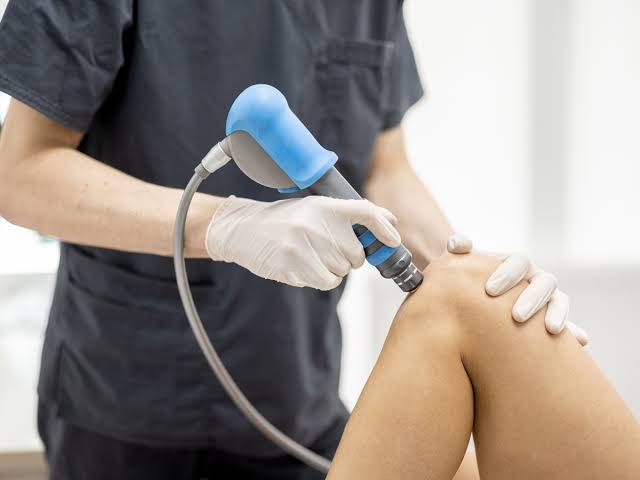
Shockwave therapy, also called extracorporeal shockwave therapy or ESWT, delivers acoustic waves through the skin into a treatment area. Despite the name, it does not involve electric shock. The mechanical energy is thought to stimulate cellular signaling, local circulation, and metabolic activity in chronically affected tissue.
There are different forms of shockwave therapy, including radial and focused systems. The most suitable approach depends on the depth and location of the tissue being treated. A treatment session is typically brief and performed in the office. Most programs involve a series of sessions rather than a single visit.
Shockwave therapy is frequently used for chronic tendinopathies, including plantar fasciitis, Achilles tendinopathy, patellar tendinopathy, and tennis elbow. It may also be considered for certain calcific shoulder conditions and other soft-tissue pain patterns. It tends to be most relevant when symptoms have persisted despite appropriate load management, physical therapy, footwear changes, or other conservative measures.
During treatment, patients may feel pulsing discomfort in the targeted area. Intensity can usually be adjusted to remain tolerable. Mild tenderness, redness, or temporary soreness can occur afterward, but most people return to normal daily activities quickly. Like PRP, shockwave therapy is not an instant fix. The goal is to encourage a more favorable healing response over time while restoring the tissue’s ability to tolerate load.
PRP Versus Shockwave Therapy: The Key Differences
The central difference is straightforward: PRP delivers concentrated components from your own blood through an injection, while shockwave therapy applies external acoustic energy without an injection. This distinction affects not only the procedure itself, but also the type of problem each approach may address best.
PRP is generally more targeted from a biologic standpoint. It may be considered when a clinician wants to place a regenerative preparation directly into a tendon, ligament, joint, or focal area of tissue injury. It can be useful when structural findings, symptoms, and physical examination point to a specific target.
Shockwave therapy is noninvasive and may be a compelling choice for superficial or accessible chronic tendon conditions. It can fit well for patients who prefer to avoid injections or who are looking for a treatment that can be integrated into an active rehabilitation program with minimal downtime.
Neither option should be selected from a menu without a diagnosis. Heel pain, for example, may be plantar fasciitis, a stress injury, nerve irritation, inflammatory disease, or a problem referred from elsewhere. The same is true of shoulder, knee, hip, and elbow pain. A precise assessment protects patients from investing in a treatment that does not match the source of their symptoms.
Which Treatment May Be Better for Your Condition?
For chronic plantar fasciitis or certain Achilles tendon complaints, shockwave therapy is often a practical first regenerative adjunct because it is noninvasive and can be delivered as a treatment series. For a focal tendon tear, persistent tendon degeneration, or a joint issue where direct placement of biologic material is clinically appropriate, PRP may be the stronger consideration.
For knee osteoarthritis, PRP is often discussed as an injectable option intended to support joint comfort and function in appropriately selected patients. Shockwave therapy may have a role in surrounding soft tissues, but it does not replace a targeted joint assessment. In cases of calcific tendinopathy of the shoulder, shockwave therapy may be considered because of its mechanical effect on the affected area, although the best plan depends on the size and position of the calcification, pain severity, and shoulder function.
Athletes and highly active adults often ask which option gets them back faster. The honest answer is that recovery depends on the diagnosis and how well the tissue is protected and progressively reloaded afterward. Returning too quickly to sprinting, jumping, heavy lifting, or repetitive gripping can undermine any treatment. A well-designed recovery plan matters as much as the procedure itself.
Can PRP and Shockwave Be Used Together?
In selected cases, yes. PRP and shockwave therapy are sometimes incorporated into the same broader care pathway, although they are not automatically combined. A physician may use PRP to address a specific tissue target and shockwave therapy as part of a staged strategy for persistent tendon dysfunction. The timing should be individualized, since the aim is to support recovery rather than overload already sensitive tissue.
This combination approach can be especially relevant for long-standing conditions where pain, altered movement patterns, loss of strength, and tissue degeneration are all contributing to the problem. It should still be paired with thoughtful rehabilitation, sleep optimization, nutrition, and management of factors that impair healing, such as smoking, poorly controlled diabetes, or medication considerations.
Safety, Expectations, and the Value of Medical Assessment
Both PRP and shockwave therapy are generally well tolerated when performed for appropriate indications by qualified clinicians. Yet no procedure is risk-free or guaranteed. PRP involves an injection, so potential considerations include post-procedure pain, bruising, bleeding, infection, and irritation of nearby structures. Shockwave therapy can cause temporary soreness, skin redness, or bruising, and it may not be appropriate in every clinical situation.
A responsible consultation should review your medical history, medications, imaging when needed, previous treatments, activity demands, and expectations. Blood-thinning medication, active infection, certain bleeding disorders, pregnancy, cancer-related concerns, implanted devices, and acute injury patterns may alter suitability depending on the treatment and location.
The quality of the plan matters. At CellStemClinic, regenerative treatment pathways are approached as personalized medical programs, with attention to diagnosis, biologic suitability, and the functional outcomes that matter to each patient. For some, the priority is walking without heel pain. For others, it is returning to tennis, lifting a grandchild, or preserving mobility as they age.
A treatment choice should feel informed, not rushed. If pain has remained despite sensible conservative care, ask for a thorough assessment of the tissue involved, the realistic role of PRP or shockwave therapy, and the rehabilitation needed to give your body the best opportunity to respond.

