

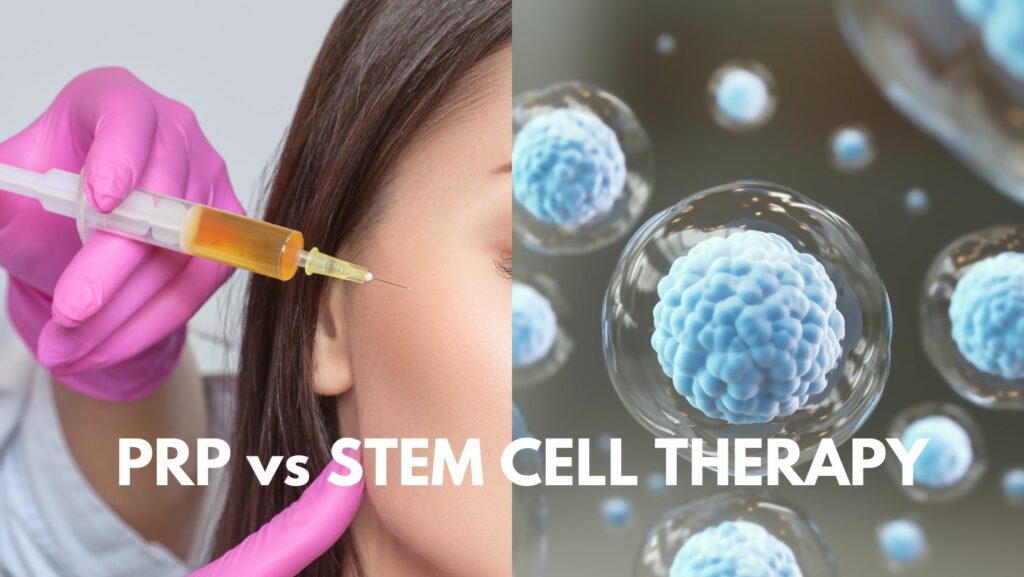
PRP vs Stem Cell Treatment: Which Fits Best?
A sore knee that keeps flaring up, a shoulder that never quite settles, hair thinning that feels more noticeable every month – these are the moments when patients start asking about PRP vs stem cell treatment. Both are regenerative therapies designed to support the body’s own repair processes, but they are not interchangeable. The right choice depends on what is being treated, how advanced the problem is, and what level of regeneration you are hoping to achieve.
For many patients, the comparison starts with a simple question: which option is stronger? That is understandable, but it is not always the most useful way to think about it. PRP and stem cell-based treatment work differently, offer different therapeutic depth, and are often suitable for different stages of tissue damage, inflammation, or degeneration.
PRP vs stem cell treatment: what is the real difference?
PRP, or platelet-rich plasma, is created from a sample of your own blood. After processing, the platelet-rich portion is concentrated and then reintroduced into the treatment area. Platelets contain growth factors and signaling proteins that can help stimulate healing, reduce irritation, and support tissue repair. In practical terms, PRP is often used to encourage a sluggish healing response to become more active.
Stem cell treatment is a broader and more advanced regenerative category. In clinical use, stem cell-based therapies are designed to support repair and restoration at a deeper biological level. Depending on the treatment protocol, these cells may help modulate inflammation, support tissue regeneration, and influence the healing environment in a more comprehensive way than PRP alone. This is one reason stem cell treatment is often considered when a condition is more complex, chronic, or degenerative.
So while PRP mainly delivers growth factors that signal repair, stem cell treatment aims to provide a higher-order regenerative effect. That difference matters.
When PRP may be the better fit
PRP is often appealing because it is relatively straightforward, minimally invasive, and based on your own blood sample. For patients with mild to moderate soft tissue issues, early joint irritation, tendon strain, or certain aesthetic concerns, it can be an attractive first-line regenerative option.
In orthopedic and sports medicine settings, PRP is commonly considered for tendon injuries, ligament irritation, muscle recovery support, and early joint wear. It is also widely used in scalp and skin rejuvenation protocols because it can stimulate circulation and biological activity in targeted tissues. For the right patient, PRP may offer a meaningful improvement with a lower level of intervention.
That said, PRP has limits. If a joint is significantly degenerated, if inflammation is long-standing and resistant, or if tissue quality is severely compromised, PRP may not be enough on its own. It can help support healing, but it does not always deliver the depth of regenerative support needed for more advanced conditions.
When stem cell treatment may offer more
Stem cell treatment is generally considered when the clinical goal goes beyond simple stimulation and toward broader biological restoration. This may apply in more advanced musculoskeletal degeneration, chronic inflammatory conditions, nerve-related issues, age-related functional decline, or cases where previous conventional care has not produced lasting improvement.
One of the key reasons patients pursue stem cell-based care is the potential for a more comprehensive regenerative response. Mesenchymal stem cells and related progenitor cells are being studied for their ability to interact with damaged tissues, regulate inflammatory signaling, and support healing in a way that is more dynamic than growth factors alone. For patients seeking advanced regenerative medicine rather than temporary symptom management, that distinction is highly relevant.
This does not mean stem cell treatment is automatically the best answer for every patient. The condition still needs to be suitable, the treatment protocol should be medically supervised, and expectations must remain realistic. Regeneration is promising, but it is not magic. Results depend on diagnosis, tissue quality, overall health, and the precision of the treatment plan.
PRP vs stem cell treatment for joint pain and orthopedic injuries
This is where the comparison becomes especially practical. If you are dealing with early cartilage wear, tendon irritation, or a sports-related overuse problem, PRP may be enough to encourage healing and calm a cycle of inflammation. It is often chosen by active adults and athletes who want a lower-intensity regenerative option with minimal downtime.
If the issue involves more pronounced degeneration, repeated flare-ups, structural decline, or persistent loss of function, stem cell treatment may be the more appropriate step. In these cases, simply stimulating healing may not be enough. The tissue environment may need more substantial regenerative support.
For example, a patient with mild tennis elbow and relatively healthy tissue may respond well to PRP. A patient with chronic knee degeneration, progressive cartilage loss, and recurring inflammation may be better served by a stem cell-based protocol. The distinction is not just about pain level. It is about biological demand.
Recovery, comfort, and treatment experience
Both options are generally marketed as minimally invasive, and for many patients that is true. PRP treatment is usually simpler because it involves blood collection, processing, and targeted injection. Stem cell treatment can vary more depending on the source, the treatment design, and whether it is combined with other biologic therapies.
Recovery also depends on the area being treated. Some patients experience only mild soreness after PRP, while stem cell treatment may involve a more noticeable post-procedural response as the regenerative process begins. Neither should be judged purely by how dramatic recovery feels. A stronger temporary response does not always mean a better result, and a simple recovery does not mean the treatment was less valuable.
From a patient perspective, the bigger difference is often strategic rather than logistical. PRP is frequently seen as a targeted regenerative boost. Stem cell treatment is more often part of a broader restorative plan.
Cost and value are not the same thing
Patients often compare PRP and stem cell treatment by price first. That is understandable, especially in private-pay medicine. PRP is usually less expensive upfront, which makes it more accessible for patients testing regenerative care for the first time.
Stem cell treatment typically commands a higher investment because the therapeutic approach is more advanced and the intended regenerative impact is broader. But a lower upfront cost does not always mean better value. If PRP is unlikely to address the degree of tissue damage involved, repeating a less suitable treatment can become less efficient over time.
The better question is not which treatment costs less. It is which treatment is more appropriate for the condition, the goals, and the likelihood of meaningful improvement.
Why some patients receive both
PRP vs stem cell treatment is not always an either-or decision. In some cases, the two therapies are used together or staged as part of a personalized regenerative program. PRP can help enhance the treatment environment, while stem cell-based therapy may provide deeper regenerative support.
This is where expert planning matters. Regenerative medicine works best when treatment selection is based on tissue condition, inflammatory burden, lifestyle factors, and long-term goals. A premium, medically guided clinic does not simply offer a menu of injections. It builds a treatment pathway.
That personalized approach is especially important for patients with chronic disease, complex pain patterns, age-related decline, or multiple areas of concern. A treatment that looks impressive in theory still needs to match the biology in front of it.
How to choose between PRP and stem cell treatment
The best decision usually comes from a detailed medical evaluation rather than a quick online comparison. A patient with early-stage injury, localized inflammation, or aesthetic concerns may do very well with PRP. A patient with more advanced degeneration, stubborn symptoms, or a broader restorative goal may be a stronger candidate for stem cell treatment.
Your age matters, but not as much as tissue quality. Your diagnosis matters, but so does how long the problem has been active. Prior treatments matter too. If physical therapy, medications, injections, or time have not moved the condition forward, that may influence the type of regenerative support worth considering.
At a medically progressive clinic such as CellStemClinic, this decision should be framed around regeneration potential, not marketing hype. The most effective treatment is the one that is selected with precision, delivered safely, and aligned with what your body actually needs.
Patients who do best with regenerative medicine tend to approach it with both optimism and clarity. They understand that healing is a biological process, not a quick fix. They also recognize that advanced therapies can offer something conventional symptom control often cannot – the possibility of supporting real repair, improved function, and a better quality of life.
If you are weighing PRP against stem cell treatment, the most useful next step is not guessing which sounds more advanced. It is finding out which one truly matches the condition you want to improve and the future you want to protect.

