

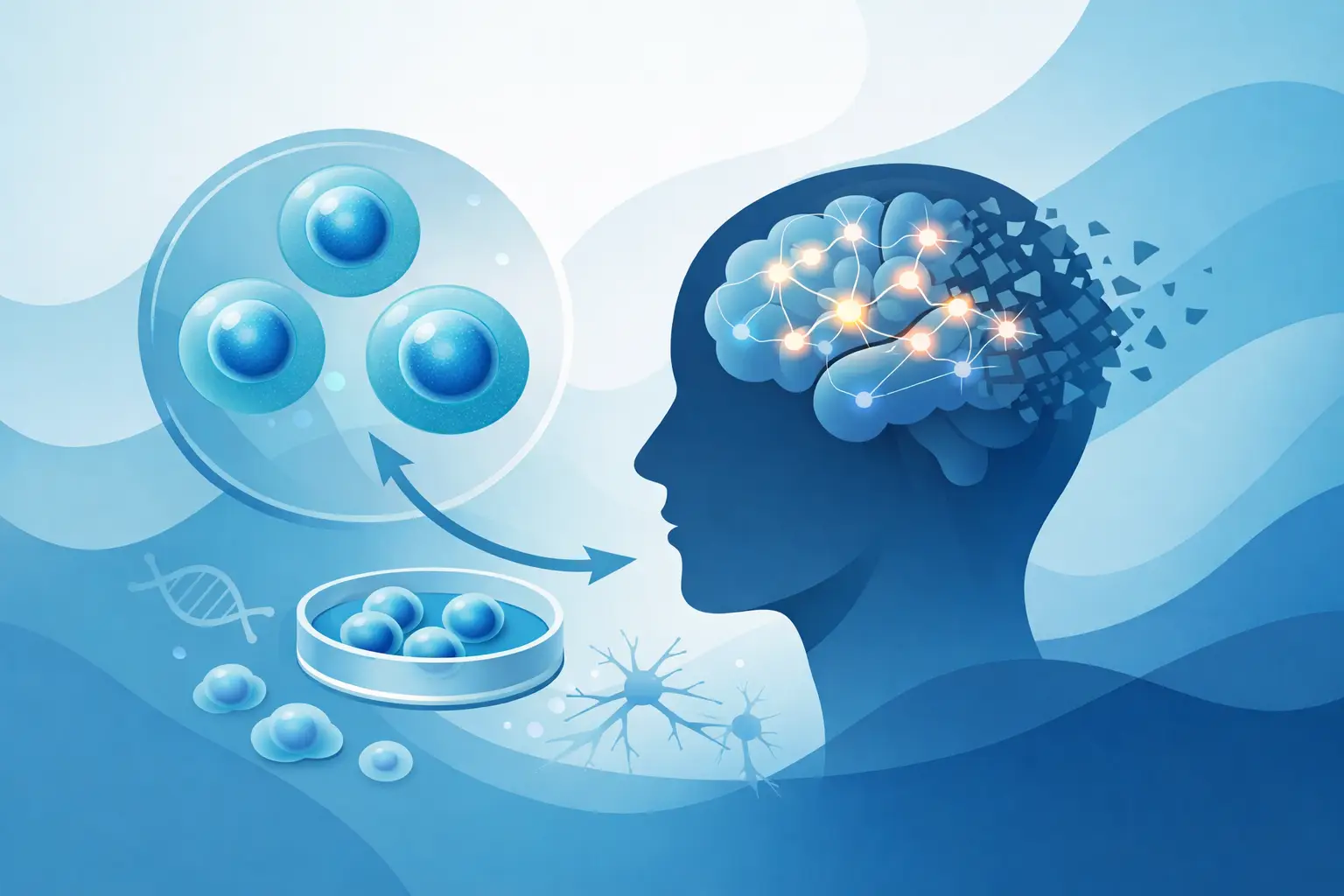
Stem Cell Support for Cognitive Decline
Forgetfulness that starts to interrupt names, appointments, conversations, or confidence rarely feels minor to the person living it. For many families, the search for stem cell support for cognitive decline begins when standard care offers monitoring, medication, and coping strategies, but little that feels truly restorative.
Cognitive decline is not one condition. It is a spectrum that can include age-related memory changes, vascular issues, inflammatory processes, post-viral effects, neurodegenerative disease, and impaired brain repair after injury or stress. That matters, because any meaningful regenerative approach has to look beyond symptoms and ask a more useful question – what is limiting the brain’s ability to recover, communicate, and protect itself?
What stem cell support for cognitive decline aims to do
Stem cell-based care is being explored because the brain does not simply need stimulation. In many cases, it needs support for repair. Mesenchymal stem cells and related biologic therapies are of interest in this setting for their signaling effects. Rather than acting like a simple replacement part, these cells may help regulate inflammation, support tissue healing, encourage healthier cellular communication, and promote a more favorable environment for neurological function.
This is an important distinction. Patients often assume stem cell therapy means new brain cells are inserted to reverse memory loss directly. The science is more nuanced. Much of the interest comes from how cellular therapies may influence the body’s own repair mechanisms, especially where chronic inflammation, vascular compromise, oxidative stress, and immune dysregulation are contributing to decline.
For the right patient, that regenerative concept is compelling. It aligns with a more advanced, root-cause-focused model of care rather than a symptom-management-only approach.
Why conventional care can feel incomplete
Standard cognitive care has a clear role. Neurological evaluation, imaging, medication review, cardiovascular risk management, and cognitive testing all matter. They can identify serious disease, clarify prognosis, and help patients plan appropriately.
Still, many people reach a point where they want more than observation. They may be functioning below their previous level, yet not be offered an intervention aimed at biological restoration. Others are told their changes are age-related, stress-related, or post-inflammatory, while continuing to struggle with concentration, recall, mental speed, or executive function.
This gap is where regenerative medicine often enters the conversation. Not as a replacement for good medical assessment, but as an advanced option for patients seeking medically supervised strategies that may support repair, resilience, and quality of life.
Who may consider this kind of regenerative support
There is no single cognitive decline patient. Some are in early stages of progressive neurological disease. Others are high-functioning adults noticing a drop in memory, processing speed, or verbal fluency that affects work and independence. Some have post-COVID cognitive symptoms, long-standing inflammatory burden, poor recovery after illness, or age-related decline that feels steeper than expected.
In practice, suitability depends on several factors. The cause of the decline matters. So does how advanced it is, how quickly it is progressing, what other medical conditions are present, and whether there is still meaningful neurological function to preserve or support. A patient with mild to moderate changes may have a different regenerative strategy from someone with advanced neurodegeneration.
This is why serious clinics do not treat cognitive complaints as a one-size-fits-all wellness issue. Proper case review is essential. The more individualized the plan, the more realistic the decision-making can be.
How treatment planning is typically approached
Stem cell support for cognitive decline should start with medical evaluation, not marketing language. A careful program generally considers symptom history, diagnosis, imaging if available, laboratory markers, vascular health, inflammatory burden, medication use, sleep quality, metabolic status, and overall functional decline.
That broader picture matters because the brain is deeply connected to systemic health. If circulation is poor, inflammation is persistent, sleep is disrupted, and metabolic stress is ongoing, any regenerative treatment may have less chance to produce meaningful benefit. In other words, cellular therapy may be part of the answer, but rarely the entire answer on its own.
This is where integrated programs tend to stand apart. A medically progressive clinic may combine stem cell-based therapy with adjunctive support designed to improve the biological environment around the brain. Depending on the case, that may include infusion therapies, targeted anti-aging support, restorative protocols, or other physician-led regenerative interventions.
What patients may hope to improve
A responsible discussion should be careful here. No ethical clinic can promise reversal of dementia or guarantee restored memory. Cognitive decline has many drivers, and outcomes vary.
What can be discussed more realistically are treatment goals. Patients often seek improvements in memory clarity, focus, processing speed, word retrieval, mental stamina, mood stability, and day-to-day independence. In some cases, the goal is not dramatic recovery but slowing deterioration, improving function, or helping the patient feel more mentally present and capable.
That distinction matters. For one patient, success may mean sharper concentration and better conversational flow. For another, it may mean preserving daily routines for longer or reducing the sense of neurological fatigue that has been affecting confidence and quality of life.
The science is promising, but still selective
Interest in regenerative neurology is growing because preclinical and early clinical work suggests that stem cell-related therapies may have neuroprotective and immunomodulatory potential. These mechanisms are relevant to cognitive decline, especially where inflammation and impaired repair are involved.
At the same time, patients deserve clarity. The evidence base is evolving, not final. Some conditions have stronger rationale than others. Some patients respond better than others. Protocols differ between clinics, cell sources vary, and long-term outcomes are still being studied across many neurological indications.
That does not make the field unconvincing. It means the field requires careful patient selection, experienced oversight, and honest framing. Premium care should include both innovation and restraint. The best regenerative medicine does not overpromise. It explains where there is potential, where there is uncertainty, and why individualized planning is essential.
Safety, supervision, and treatment quality
When cognitive health is involved, patients should look closely at how a clinic evaluates risk, not just how it describes results. Medical supervision, protocol quality, patient screening, and the source and handling of regenerative materials all matter.
This area of medicine attracts attention because the upside feels significant. It also requires discipline. Patients should expect transparent consultation, a clinically reasoned treatment pathway, and realistic discussion of expected response. Anyone presenting cognitive stem cell therapy as a guaranteed cure is simplifying a complex neurological issue.
High-quality care is more reassuring when it is physician-led, customized, and grounded in broader restorative medicine rather than offered as an isolated procedure without context.
A more complete view of brain aging and repair
One reason regenerative care resonates with patients is that it treats cognitive decline as more than a brain-only problem. Brain function reflects inflammation, circulation, mitochondrial health, immune signaling, hormonal balance, and the body’s overall capacity to repair. That broader lens is especially relevant in adults who feel they have aged faster after illness, chronic stress, or inflammatory burden.
For patients seeking advanced options, that shift in perspective can be empowering. It reframes care from passive decline management to active biological support. At CellStemClinic, that philosophy aligns with a wider commitment to medically supervised regeneration, where cellular therapies are considered within a personalized plan for healing, resilience, and longer-term function.
Not every patient will be an ideal candidate. Not every case will produce the same degree of change. But for those looking beyond conventional pathways, stem cell support may represent a serious and forward-looking option worth discussing with an experienced regenerative medicine team.
When memory, clarity, and independence begin to feel less certain, the most valuable next step is often not rushing into treatment, but choosing a clinic that takes both the science and your future seriously.

